Tiếng Việt
 日本語
日本語 한국어
한국어
In the context of Industry 4.0, precision machining plays a critical role in sectors such as aerospace, medical technology, and renewable energy. Mastering both the technical fundamentals and the application of modern manufacturing technologies not only improves product quality but also creates a sustainable competitive advantage. In this article, SDE Tech will analyze the key technical aspects and standard processes required to achieve high precision in modern manufacturing.
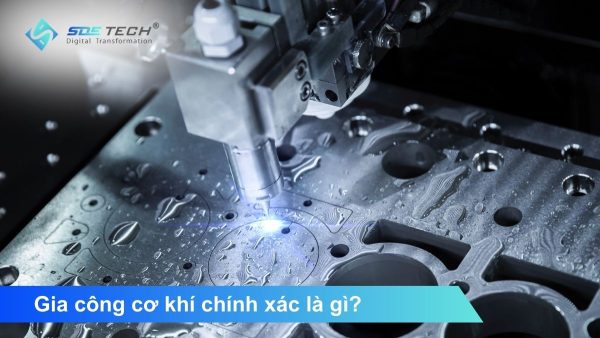
1. Overview of Precision Machining
Precision machining is a broad field, but when referring to “precision”, it represents a completely different level of manufacturing engineering—where tolerances are measured in extremely small units and every detail must strictly meet design specifications.
1.1 What is Precision Machining?
Precision machining is the process of removing material from a workpiece to create components with exact shapes, dimensions, and surface finishes according to engineering drawings, while maintaining very tight tolerances. This process is primarily performed using CNC machine, which enables automated and highly accurate control of cutting tool movements. The final product must not only meet geometric accuracy requirements, but also satisfy criteria related to surface quality, hardness, and assembly compatibility within complex mechanical systems.
1.2 Differences Between Precision Machining and Traditional Machining
The major difference lies in the control method and error management capability.
- Traditional Machining: Conventional machining relies heavily on the skill and experience of the operator when using manual lathes or milling machines. This often leads to larger deviations, inconsistent results in mass production, and lower productivity.
- CNC Precision Machining: Precision machining using CNC technology relies on computer-generated programs to control machine tools. This significantly reduces human-related errors, allowing manufacturers to process harder materials and produce complex geometries that are difficult or impossible with manual machining methods.
1.3 The Role of CNC Machines in Modern Manufacturing
CNC machines are considered the core of the precision machining process. They convert digital design data from engineering software into precise mechanical cutting motions. With features such as continuous operation, high spindle speeds, and automatic tool changers, CNC machines enable manufacturers to produce highly complex components, while ensuring consistent quality and reliable production timelines for every batch.
Related Article: What Is CNC? Exploring CNC Machining Technology and Key Trends in 2026
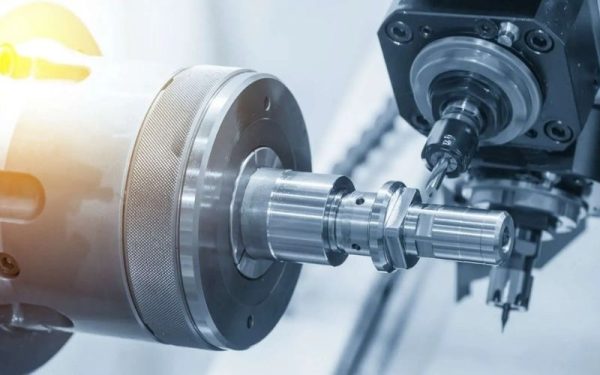
2. Why Businesses Should Prioritize CNC Precision Machining
Investing in and prioritizing precision machining solutions is not merely about following technological trends. Instead, it represents a strategic economic decision that can deliver significant operational and financial benefits for manufacturing companies.
- Ultra-tight tolerances and consistent surface quality: CNC machining can maintain tolerances at the micrometer level, making it suitable for industries such as semiconductors and medical devices. At the same time, it produces smooth and uniform surfaces, minimizing scratches and burr formation.
- Machining complex geometries (3D and 5-axis): Multi-axis CNC machines enable manufacturers to process curved surfaces, helical grooves, and deep cavities in 3D space. This capability reduces the number of setups required and significantly limits accumulated machining errors.
- Reduced defect rates: Because machining processes are programmed and controlled, factors such as cutting forces, temperature, and tool wear can be managed effectively. This helps reduce scrap rates while saving both raw materials and production costs.
- High repeatability for mass production: Machining programs can be stored and reused, allowing manufacturers to reproduce parts with consistent quality across multiple batches, ensuring that each product matches the previous one precisely.
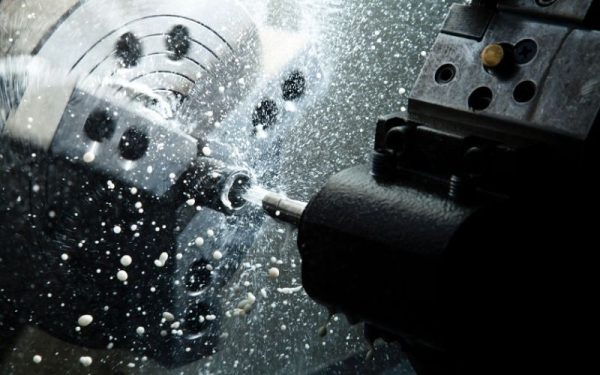
3. Standard Precision Machining Process (From Design to Finished Product)
A professional precision machining process does not begin on the shop floor—it starts in the engineering department, supported by modern digital solutions such as those provided by SDE Tech.
3.1 3D Modeling and Engineering Drawings
Every mechanical component begins as an idea created in CAD (Computer-Aided Design) software. Using powerful tools such as Siemens NX, Solid Edge, or CrownCAD, engineers can build highly accurate 3D models that integrate complete technical information, including tolerances, materials, and special engineering requirements. This stage forms the foundation of the entire digital engineering workflow.
3.2 Toolpath Programming and Machining Simulation (CAM & Simulation)
Once the 3D model is completed, CAM (Computer-Aided Manufacturing) engineers define the toolpath strategies required for machining. At this stage, the software calculates the optimal cutting trajectories for the tools. More importantly, virtual machining simulations allow engineers to detect potential collisions between tools, fixtures, and machine components before actual production begins, helping protect both equipment and operators.
3.3 Material, Tooling, and Fixture Setup
Depending on product requirements, engineers select appropriate materials such as alloy steel, aluminum, or titanium, along with coated cutting tools optimized for the specific machining conditions. Fixture design is also critical at this stage. Fixtures must provide secure clamping forces without deforming the workpiece, ensuring that the part remains stable throughout the entire precision machining process.
3.4. CNC Machining Operations (Milling, Turning, Wire EDM)
At this stage, the machining program is transferred to the controller of the CNC machine. Depending on the part requirements, 3–5 axis CNC milling machines, CNC lathes, or wire EDM machines will perform the material removal process. The machine operator must continuously monitor real-time parameters and make timely adjustments if there are unusual changes in sound, vibration, or machining conditions.
3.5. Quality Inspection (QC) and Post-Machining Surface Treatment
After leaving the machine, the component is transferred to the inspection room for dimensional verification using equipment such as coordinate measuring machines (CMM) and surface roughness testers. If the part meets all required specifications, it may undergo additional surface treatment processes such as plating, black oxide coating, or polishing to enhance both aesthetic appearance and wear resistance.
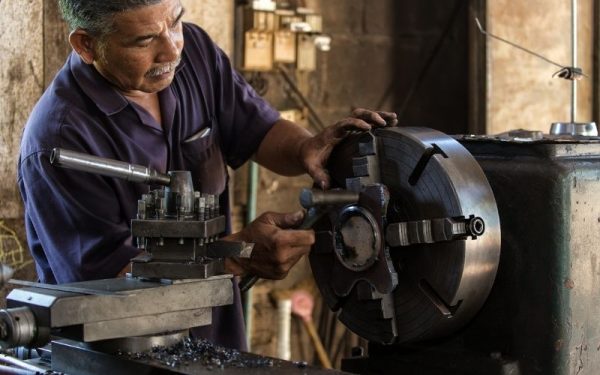
4. Factors That Determine the Accuracy of Machined Components
Precision does not occur by chance; it is the result of synchronized coordination between hardware, software, and human expertise. A rigid CNC machine structure, precise linear guide systems, and a spindle with extremely low runout are fundamental requirements. If the machine lacks sufficient rigidity, chatter vibration may occur, which can damage the machined surface and cause dimensional deviations beyond the allowed tolerance range.
- CNC Machine Quality and Rigidity: Machines with a robust frame structure, high-precision guideways, and low spindle runout help prevent chatter and ensure that both surface finish and dimensional tolerances meet the required standards.
- CAM Software and Toolpath Optimization: Advanced CAM solutions help optimize cutting loads and tool engagement. Technologies such as VoluMill maintain a consistent tool engagement angle, reducing vibration, extending tool life, and enabling high-speed machining while preserving precision.
- Technician Expertise and Quality Control (QC): Operators and engineers must understand cutting parameters, engineering drawings, and troubleshooting procedures. A strict quality control process ensures that defects are detected and resolved before products are delivered.
- Cutting Tools and Machining Parameters: Worn tools or incorrect parameter selection—such as spindle speed and feed rate—can cause thermal deformation, directly affecting dimensional tolerances. Therefore, these factors must be accurately calculated and optimized from the beginning of the machining process.

5. Frequently Asked Questions About Precision Machining
5.1 How can I reduce costs when ordering precision machining services?
To reduce costs, it is recommended to optimize the design drawings before manufacturing. Avoid features such as overly deep cavities, extremely small fillet radii that require specialized cutting tools, and unnecessarily tight tolerances in non-critical areas. By simplifying the design where possible, manufacturers can reduce machining time, tooling costs, and production complexity, ultimately lowering the overall manufacturing cost.
5.2 Which software solutions are best for CNC machining programming today?
Currently, solutions such as NX CAM from Siemens and Mastercam are considered among the most powerful tools for precision CNC machining.
These platforms support programming from 2.5-axis to simultaneous 5-axis machining, along with integrated machine simulation and advanced toolpath optimization. This allows manufacturers to maximize the productivity and performance of their CNC machines.
Precision machining is not just a technical process; it is the integration of advanced technology, engineering expertise, and a robust quality management system. Mastering precision means gaining a competitive advantage in the future of modern manufacturing.
If you are looking to upgrade your machining capabilities or learn more about advanced toolpath optimization solutions, contact the engineering team at SDE Tech for professional consultation.
- Website: sde.vn
- Email: sales@sde.vn
- Hotline/Zalo: 085 256 2615 – 0909 107 719
Leave your information to receive precision machining consultation: