Tiếng Việt
 日本語
日本語 한국어
한국어
In precision machining, cutting tool costs typically account for 3–10% of the total manufacturing cost. If rapid milling tool wear is not properly controlled, these costs can increase significantly. At the same time, it may lead to dimensional inaccuracies, reduced surface quality, and increased machine downtime. This article analyzes the common signs of tool wear, underlying causes, and technological solutions that help effectively extend cutting tool life.
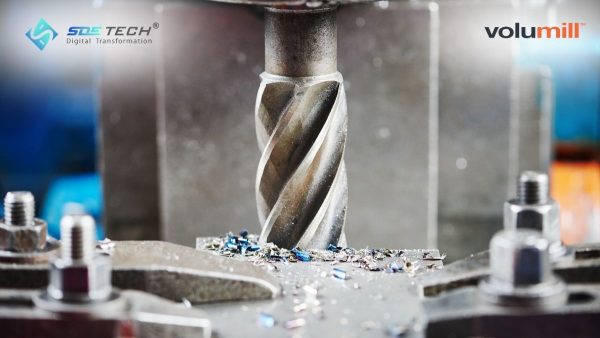
1. Signs of Rapid End Mill Wear or Tool Failure
Before implementing corrective actions, it is essential to identify the warning signs indicating that an end mill is wearing rapidly or experiencing tool failure. Recognizing these symptoms early helps operators prevent machining defects, tool breakage, and unnecessary downtime.
1.1 End Mill Edge Chipping or Sudden Tool Breakage
Chipping refers to the phenomenon where small fragments break off from the cutting edge. This is typically caused by thermal shock or mechanical impact loads during machining. If small chips appear along the flute edges when inspected under magnification, it indicates that the tool is experiencing unstable cutting loads. In more severe cases, the tool may fracture suddenly when the cutting force exceeds the material’s strength limit (commonly carbide tools).
1.2 Flank Wear, Crater Wear, and Built-Up Edge (Material Adhesion)
- Flank Wear: This is a natural wear pattern during machining. However, if it develops too quickly, the primary cause is usually excessive friction between the tool flank and the workpiece surface.
- Crater Wear: Crater wear appears as concave pits on the rake face of the cutting tool. This type of wear typically occurs when the temperature in the cutting zone becomes excessively high.
- Built-up Edge (BUE): This phenomenon is common when machining ductile materials such as aluminum or stainless steel. Workpiece material adheres to the cutting edge, altering the tool geometry. When the adhered material eventually breaks off, it can cause micro-chipping of the cutting edge.
1.3. Poor Surface Finish and Burr Formation
When the cutting tool is still sharp, the machined surface is typically smooth and glossy. However, when the end mill wears rapidly during machining, its cutting efficiency decreases and the tool begins to rub against the material instead of cutting it cleanly. As a result, the machined surface may exhibit visible waviness, increased surface roughness (Ra, Rz), and burr formation along the edges of the workpiece.
1.4. Dimensional Inaccuracy After Machining
Tool wear leads to changes in the effective cutting diameter. For example, an end mill with 0.1 mm of flank wear can directly cause dimensional deviations in the machined part. In addition, a worn tool generates higher cutting forces, which may cause tool deflection. This deflection can result in errors in wall straightness and perpendicularity of the machined surfaces, ultimately affecting the overall dimensional accuracy of the component.
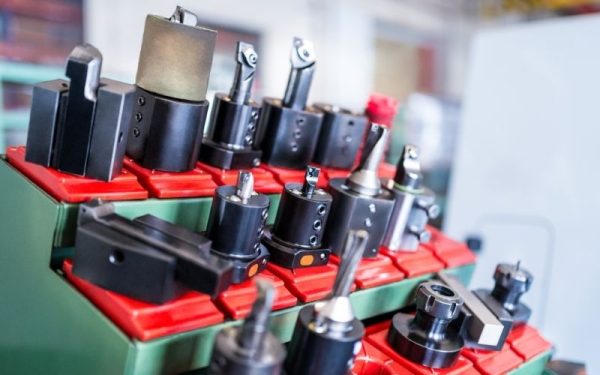
2. Analysis of Four Core Causes of Reduced End Mill Tool Life
Understanding why cutting tools wear prematurely is the key to optimizing the machining process. Based on practical observations from machining workshops, SDE Tech frequently identifies four primary causes that significantly reduce end mill tool life.
2.1 Improper Cutting Parameters for the Workpiece Material
This is one of the most common mistakes in machining operations. If the cutting speed (Vc) is too high, excessive heat is generated in the cutting zone, which can soften the tool coating and the carbide substrate, accelerating tool wear. Conversely, if the feed per tooth (fz) is too low, the tool may rub against the material instead of producing proper chips. This rubbing effect increases friction and leads to rapid tool wear due to dry friction rather than efficient chip formation.
2.2 Chip Evacuation Problems and Chip Recutting
When chips are not evacuated efficiently—especially during deep slot milling or machining narrow cavities—the cutting tool may begin recutting previously generated chips. Chip recutting produces continuous micro-impact loads on the cutting edge, which gradually cause edge chipping and accelerated wear.
2.3 Aggressive Tool Entry and Exit Causing Mechanical and Thermal Shock
Traditional toolpath strategies often program the tool to enter the workpiece vertically (plunge) or engage the material at a sharp angle. At the moment of contact, the cutting force spikes abruptly from zero to maximum, creating mechanical shock on the cutting edge. Similarly, rapid temperature fluctuations when the tool repeatedly engages and disengages the material can generate thermal cracks in the cutting edge, further shortening tool life.
2.4 Tool Deflection and Spindle Runout Causing Vibration
Tool deflection (Y) can be estimated using the formula:
Y= (F.L3) / (3.E.I)
Where L represents the tool overhang length. If the tool overhang is too long, or if the spindle has even a small runout of about 0.01 mm, the cutting load will not be evenly distributed across the flutes. As a result, one flute may carry most of the cutting load, which can quickly lead to premature tool failure due to vibration and chatter.
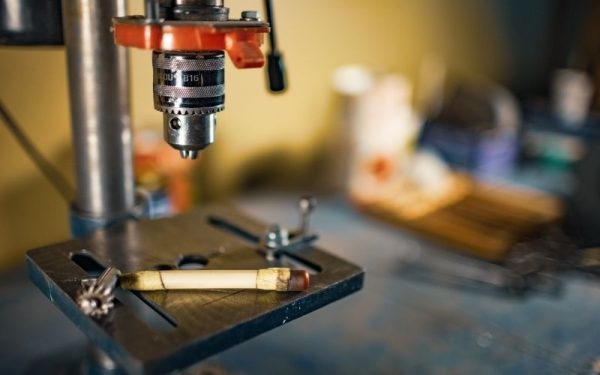
3. Operational Techniques to Reduce Rapid End Mill Wear
To protect cutting tools directly at the machine, operators can apply the following practical machining strategies:
3.1 Climb Milling vs. Conventional Milling: Which One Protects the Tool?
In most CNC machining applications, Climb Milling is the preferred strategy for extending tool life. In climb milling, the chip thickness starts at its maximum and gradually decreases to zero, allowing heat to be carried away with the chips and reducing friction on the tool flank. Conventional milling should mainly be used when machining surfaces with hard outer layers, such as cast or forged parts, to prevent the cutting edge from impacting the hardened surface at the initial contact.
3.2 Use Coolant Properly and Effectively
Improper coolant application can be more harmful than not using coolant at all. If the coolant flow is unstable, the tool may experience repeated thermal shock (rapid heating and cooling), which can lead to cracking or fracture of the carbide cutting edge. When machining hardened steel, using compressed air or Minimum Quantity Lubrication (MQL) may sometimes provide better tool life than traditional flood coolant.
3.3 Control Tool Overhang and Improve Workholding Rigidity
Always follow the rule: “The shorter the tool overhang, the better.” Reducing tool overhang significantly increases system rigidity and minimizes tool deflection. At the same time, the workholding setup must effectively suppress vibration. A vibrating workpiece during machining is one of the primary causes of flute chipping in end mills.
3.4 Separate Roughing Tools and Finishing Tools
Avoid using finishing end mills for roughing operations. Roughing tools are designed with stronger cutting edge geometries to withstand heavy cutting loads, while finishing tools prioritize sharpness and smoother coatings to achieve superior surface finish. Using finishing tools for roughing operations can quickly degrade their cutting edge, making it difficult to achieve the required surface quality in the finishing stage.
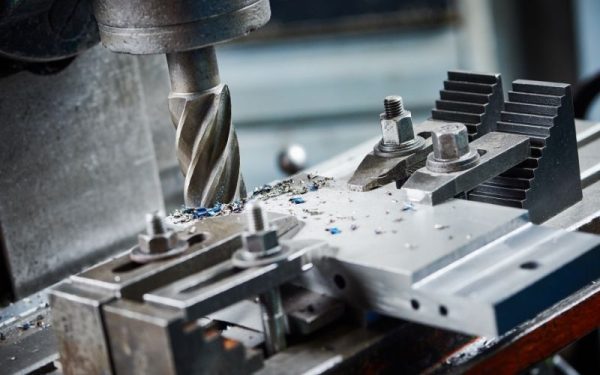
4. Extending Tool Life by Up to 5× Through Toolpath Optimization
This is the key point that SDE Tech wants to emphasize. Hardware components such as machines and cutting tools are necessary, but CAM software is the critical factor that ultimately determines whether machining costs can be optimized.
4.1 Smooth Tool Entry and Exit Strategies (Ramping / Helical Entry)
Instead of plunging the tool directly into the material, modern CAM systems allow programmers to use helical entry or ramping strategies. These approaches enable the cutting force to increase gradually, eliminating the sudden mechanical shock that typically occurs at the beginning of a plunge cut. As a result, the end mill tip—one of the most sensitive parts of the tool—is better protected.
4.2 Distributing Cutting Load Across the Entire Flute Length
Traditional milling strategies often use a very small axial depth of cut (ap) but a large radial engagement (ae). This means that only the first 1–2 mm at the tip of the tool is actively cutting, while the rest of the flute length remains unused. A more modern strategy is to maximize the axial depth of cut (ap)—utilizing the full cutting edge length—while significantly reducing the radial engagement (ae). This approach helps distribute heat and cutting load evenly along the entire tool body, which can significantly extend tool life.
4.3 Applying VoluMill to Maintain Consistent Chip Thickness and Cutting Load
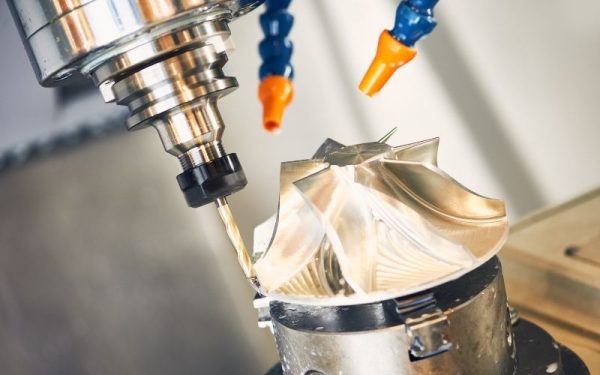
VoluMill is considered a highly effective solution for addressing rapid end mill wear during machining. The VoluMill toolpath algorithm ensures that the arc of engagement remains constant throughout the cutting process. With traditional toolpaths, when the cutter enters a corner, the engagement angle increases dramatically, which can overload the tool and lead to breakage.
VoluMill automatically adjusts the toolpath to maintain a consistent cutting load at all positions, preventing sudden spikes in cutting forces. Real-world results from SDE Tech customers show that tool life can increase by 300% to 500% when using optimized VoluMill toolpaths.
5. Frequently Asked Questions About Rapid End Mill Wear
5.1 Why Does the Tool Still Wear Quickly Even After Reducing the Spindle Speed?
Reducing the spindle speed without adjusting the feed rate will increase chip thickness, which may cause mechanical overloading of the cutting edge. On the other hand, if the spindle speed is reduced too much, the tool may stop cutting effectively and begin rubbing against the material. This rubbing action generates excessive heat due to friction, which can cause the tool to wear even faster than at higher cutting speeds.
5.2 Why Does the Coating on My End Mill Peel Off Prematurely?
The most common causes are thermal shock or incompatibility between the tool coating and the workpiece material. For example, coatings that contain aluminum (Al) may experience chemical interaction when machining aluminum alloys, which can lead to premature coating delamination.
5.3 Should Coolant Always Be Used During CNC Milling?
Not necessarily. When machining hardened steel with carbide tools at high cutting speeds, unstable coolant application can cause thermal cracking due to sudden temperature fluctuations. In such cases, dry machining with a strong stream of compressed air often provides better tool life.
The issue of rapid end mill wear during machining is not only a technical problem but also a cost optimization challenge for manufacturing businesses. Instead of continuously replacing cutting tools, identifying the root causes of tool wear and applying advanced toolpath technologies such as VoluMill or modern CAM software is the most effective way to optimize production efficiency.
With many years of experience in providing digital engineering solutions for the manufacturing industry, SDE Tech is always ready to partner with businesses to solve challenges related to productivity improvement and cutting tool life optimization. Would you like to test the VoluMill solution to extend tool life in your workshop? Contact SDE Tech today for expert consultation and a live demonstration directly on your own parts and machining processes.
- Email: sales@sde.vn
- Hotline/Zalo: 085 256 2615 – 0909 107 719
Related article: