Tiếng Việt
 日本語
日本語 한국어
한국어
In modern manufacturing, precision and speed are the two critical factors that determine a company’s competitiveness. Owning high-end machinery alone is not enough; the core lies in how a company builds and operates a well-structured CNC machining process. A standardized process not only ensures consistent product quality but also protects machinery assets, optimizes tool life, and minimizes unnecessary scrap.
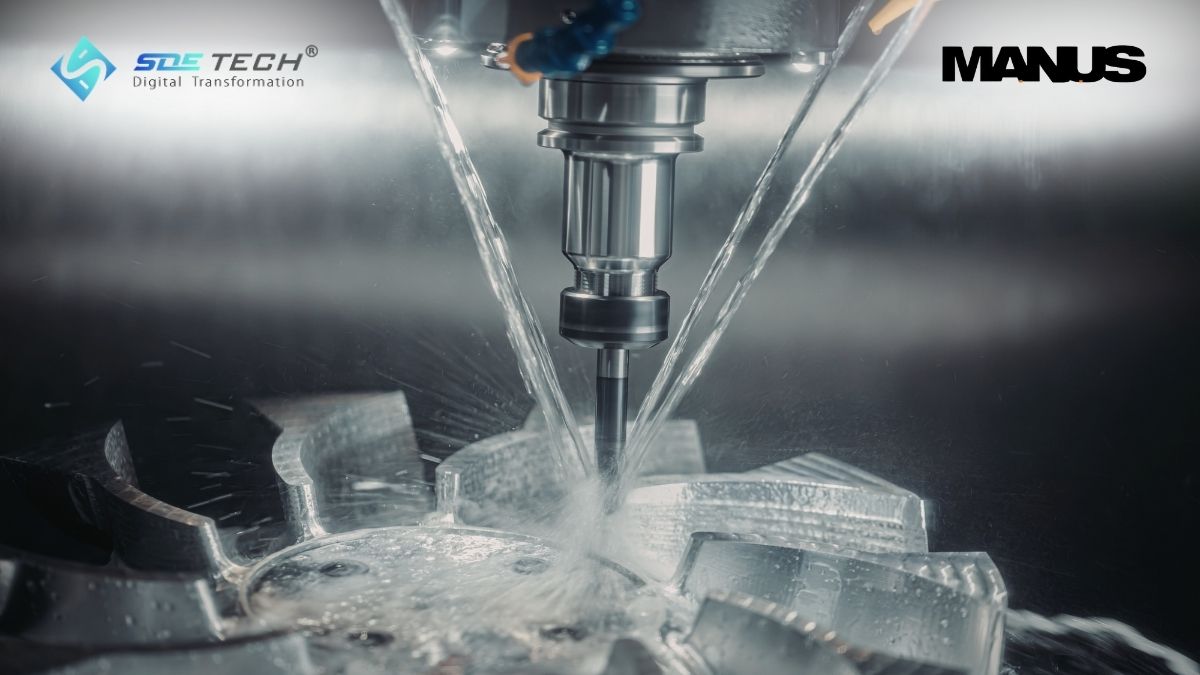
1. What is CNC machining? The role of a standardized process in manufacturing
Before diving into the steps, it is essential to establish a logical understanding of numerical control technology and the importance of a systematic approach in manufacturing.
1.1. Definition of CNC machining
CNC machining (Computer Numerical Control) is the process of using pre-programmed computer software to control machine tool movements. Instead of relying on manual skills like traditional machining methods, CNC machines execute cutting operations based on highly precise mathematical coordinates. A CNC machining process enables the production of complex geometries with high repeatability, often achieving tolerances at the micron level.
1.2. Why do businesses need a closed-loop CNC machining process?
Manufacturing is a chain of interconnected activities. Without a closed-loop process, data becomes fragmented between design and production stages. A standardized CNC machining process helps control all variables—from toolpath optimization and cutting condition selection to simulation for collision prevention. This eliminates the costly “trial-and-error” approach on the shop floor.
1.3. Trends in smart machining
With the rise of Industry 4.0, CNC machining is evolving toward “smart manufacturing.” This involves integrating advanced software solutions that automatically calculate optimal cutting conditions based on machine dynamics. A smart CNC machining process reduces reliance on operator experience and leverages data-driven decision-making for higher accuracy.
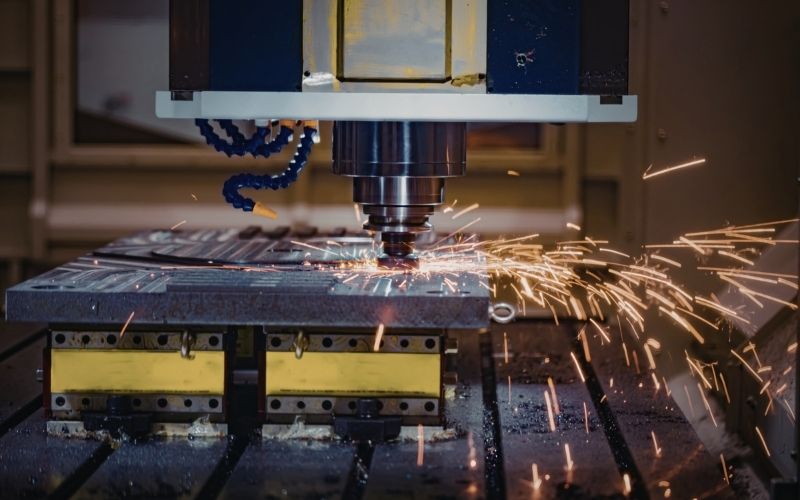
2. Detailed CNC machining process (from design to final product)
A professional CNC machining process consists of seven key steps. Each step plays a crucial role in ensuring the final product meets technical requirements.
2.1. Step 1 – 3D design (CAD)
The process begins with creating the product’s geometric data. Modern CAD software such as CrownCAD and NX CAD allows engineers to build precise 3D models. At this stage, factors such as tolerances, wall thickness, and tool accessibility must be carefully considered.
2.2. Step 2 – CAM programming with Mastercam
Once the 3D model is ready, it is converted into toolpaths. Mastercam and NX CAM are widely used CAM solutions. Engineers select appropriate machining strategies and define key parameters such as spindle speed and feed rate to ensure machining feasibility.
2.3. Step 3 – Toolpath optimization with VoluMill
To improve productivity, VoluMill technology is used to optimize roughing operations. Unlike traditional toolpaths that create fluctuating cutting forces, VoluMill maintains a constant tool load, allowing higher speeds while protecting the tool from excessive wear or breakage.
2.4. Step 4 – Simulation and G-code verification with MANUSsim
Before running the program on an actual machine, simulation is essential. MANUSsim performs G-code-based simulation to detect potential collisions between spindle, fixtures, and workpieces. Unlike CAM simulations, it verifies the exact instructions the CNC machine will execute, ensuring maximum safety.
2.5. Step 5 – Post-processing with MANUSpost
Different CNC machines use different controllers such as Fanuc, Siemens, or Heidenhain. MANUSpost converts toolpaths into machine-specific G-code, ensuring compatibility and accuracy.
2.6. Step 6 – Machine setup and operation
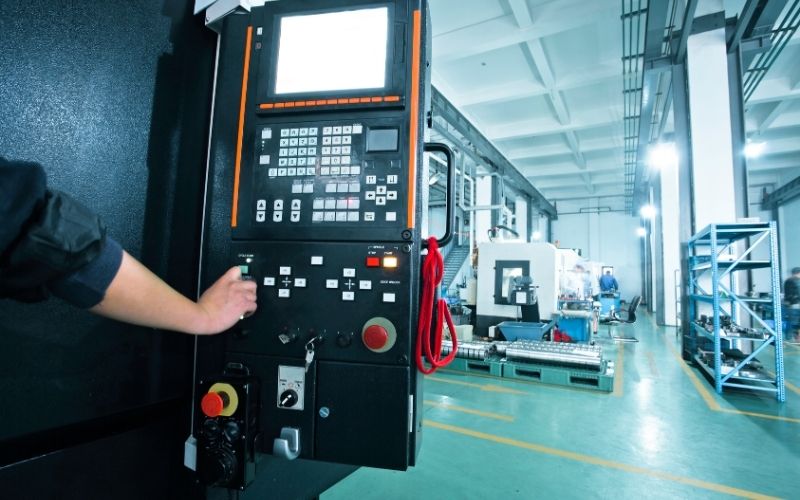
This stage transitions from digital data to physical production. Operators mount the workpiece, set work offsets, and load tool data. After transferring the G-code, a final test run is conducted before full automation begins.
2.7. Step 7 – Inspection and quality evaluation
After machining, parts are cleaned and inspected using precision measuring tools such as CMM machines, calipers, or micrometers. This step ensures dimensional accuracy and provides feedback for further process optimization.
3. Factors affecting accuracy in CNC machining
Product accuracy is influenced by multiple factors within the manufacturing system.
3.1. Cutting tools and fixturing quality
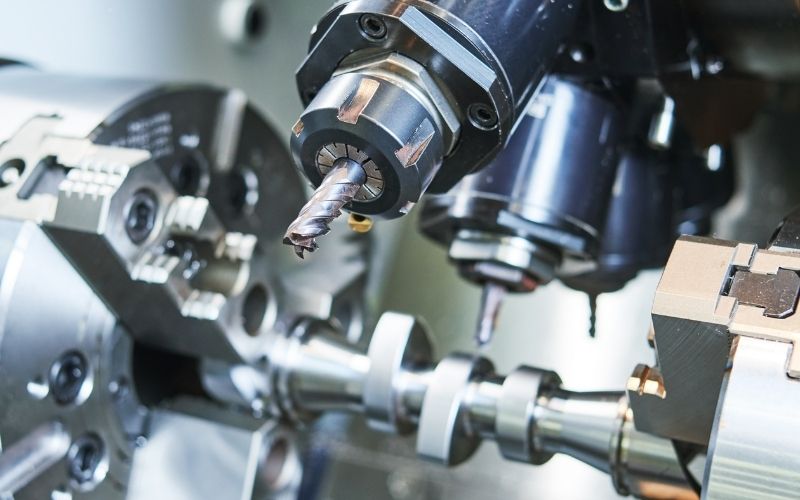
Cutting tools directly shape the product. Worn or low-rigidity tools cause vibration and dimensional errors. Similarly, unstable fixtures lead to workpiece movement under cutting forces. High-quality tools and proper fixturing are essential.
3.2. Machine stability and precision
Machine axes must be regularly calibrated to ensure repeatability. A well-designed CNC machining process considers machine limitations to avoid overload and maintain accuracy.
3.3. CAM software and post processor capability
Software controls the entire process. Poor toolpaths or incorrect G-code from the post processor can result in defective parts. Synchronization between CAM software and machine controllers is critical.
4. Benefits of standardizing CNC machining processes
Implementing a standardized process brings significant value both economically and in brand reputation.
- Reduce material and tooling costs: Minimize scrap and extend tool life.
- Ensure quality and precision: Maintain consistent surface finish and dimensional accuracy.
- Increase machine lifespan and reduce downtime: Prevent collisions and overload, improving overall equipment effectiveness (OEE).
5. Frequently asked questions
Where should I start to standardize my CNC machining process?
Start by standardizing input data. Ensure your design and programming teams use robust tools like Mastercam and a reliable post processor such as MANUSpost.
Why is CAM simulation not enough?
CAM simulation only checks theoretical toolpaths. Errors often arise from G-code or real machine setups. MANUSsim verifies actual machine instructions, ensuring safety.
Does VoluMill require modern CNC machines?
Not necessarily. VoluMill optimizes cutting forces, making even older machines run more smoothly. However, the best performance is achieved with high-speed processing machines.
Building a standardized CNC machining process is a transition from experience-based manufacturing to data-driven production. By integrating CAD design, optimized CAM programming, and safe simulation, companies can fully control their manufacturing processes. With the support of SDE Tech and leading solutions like Mastercam, VoluMill, and MANUS, we are committed to delivering optimal solutions for your business.
- Website: sde.vn
- Email: sales@sde.vn