Tiếng Việt
 日本語
日本語 한국어
한국어
In modern manufacturing environments, many companies operate multiple CNC machine lines and different CAM software platforms simultaneously. In such cases, the challenge is not only maximizing machining efficiency, but also ensuring consistent performance across the entire system without investing in separate modules for each platform.
VoluMill NEXION was developed to address this challenge. As the standalone version of VoluMill technology from Celeritive Technologies, NEXION enables Ultra High Performance Toolpath (UHPT) machining strategies to be applied across most existing CAM platforms. In this article, SDE TECH analyzes the architecture, technical advantages, and reasons why NEXION is an ideal solution for multi-platform CAM environments.
1. What is VoluMill NEXION?
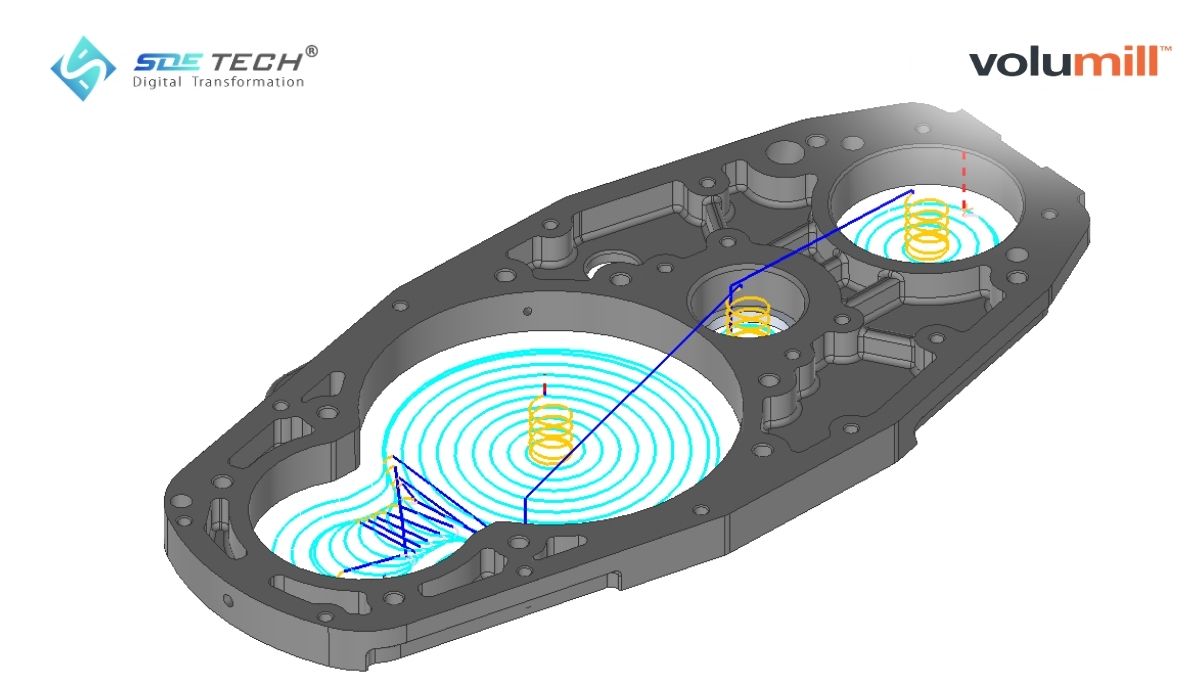
VoluMill NEXION is the next generation of VoluMill Universal and serves as the standalone edition within the VoluMill ecosystem. It is designed to operate independently of any specific CAM platform. Instead of requiring deep integration into a dedicated CAM system, NEXION imports geometric data from standard neutral file formats including DXF, IGES, STEP, and STL to calculate and generate UHPT toolpaths.
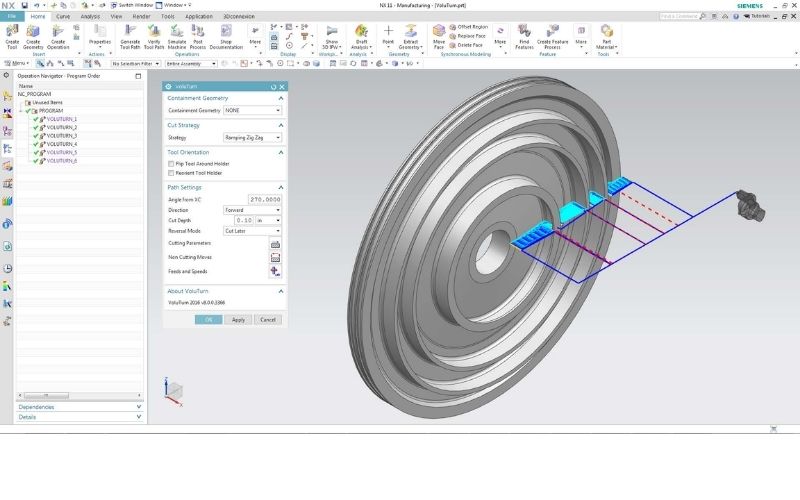
The key difference between NEXION and integrated editions lies in platform independence. While integrated versions function as add-ons for Siemens NX, CAMWorks, GibbsCAM, OPEN MIND, Cimatron, or TopSolid, NEXION operates as a standalone application. It imports geometry from virtually any CAD/CAM system, generates toolpaths using the VoluMill algorithm, and exports CL (Cutter Location) data for integration back into the machining workflow through an appropriate Post Processor.
This architecture provides a level of deployment flexibility that traditional integrated modules cannot offer, especially for factories that are not ready to standardize all CAM operations on a single platform.
2. Unique Advantages of VoluMill NEXION
When comparing VoluMill NEXION with integrated editions and other high-performance toolpath solutions on the market, there are three key technical advantages manufacturers should understand before deployment.
2.1. Universal Compatibility with All CAD/CAM Systems
The software supports importing geometry from the most widely used neutral formats in the manufacturing industry, including DXF, IGES, STEP, and STL. This means that whether a company is using Mastercam, Creo, CATIA, PowerMill, or even less common local CAM software, NEXION can still process the data and begin toolpath programming without requiring plugins or add-ons installed in the source software.
From an operational perspective, this completely eliminates dependency on CAM vendors’ integration update schedules. Manufacturers no longer need to wait for CAM providers to support the latest VoluMill release. NEXION remains fully operational as an independent solution that can be upgraded separately without affecting the rest of the software ecosystem.
2.2. Direct Processing of Complex Geometry from Neutral Files Without Plugins
A common limitation of many third-party toolpath solutions is their dependency on plugins or APIs to read and process geometry from host CAM systems. NEXION completely removes this requirement.
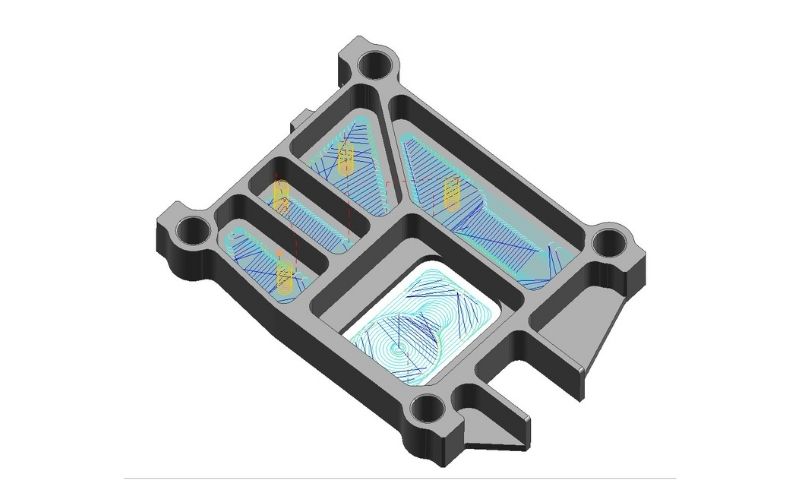
The software directly processes geometry files from neutral formats, including surface models and wireframe geometry for 2-axis machining applications. VoluMill’s UHPT algorithm analyzes the entire stock boundary, identifies remaining material after each machining step, and calculates toolpaths that maintain consistent chip load regardless of how many complex pockets, islands, or vertical walls the part contains.
As a result, manufacturers can handle complex machining applications ranging from freeform mold surfaces to precision mechanical components with multiple steps and overlapping slots without switching software or performing complicated intermediate data conversion processes.
2.3. Optimized Toolpaths Based on CNC Machine Dynamics
Unlike conventional toolpath systems that calculate motion purely based on geometry, VoluMill NEXION incorporates toolpath planning based on the real dynamic characteristics of CNC machines. Programmers can configure machine limitations including maximum spindle speed, torque, acceleration, and cutting force limits, allowing NEXION to generate toolpaths specifically optimized for each machine’s actual capabilities.
UHPT technology ensures that the cutting tool moves continuously along tangent paths, avoiding sudden directional changes that typically cause load spikes, vibration, and accelerated tool wear. As a result, even when machining difficult materials such as titanium, nickel alloys, or stainless steel, cutting conditions remain stable throughout the entire machining cycle regardless of part geometry or complexity.
3. Why Do Multi-Machine and Multi-CAM Manufacturers Need VoluMill NEXION?
Many factories in Vietnam currently operate hybrid manufacturing environments. One workshop may simultaneously use Mastercam for Fanuc machining centers, NX CAM for Siemens 5-axis machines, and another CAM solution for Swiss-type turning centers. In such environments, investing in separate VoluMill modules for each CAM platform is not only expensive but also creates fragmented version management and inconsistent workflows.
VoluMill NEXION addresses both challenges through a centralized and systematic approach.
3.1. Standardizing High-Speed Machining Processes Across the Entire Factory
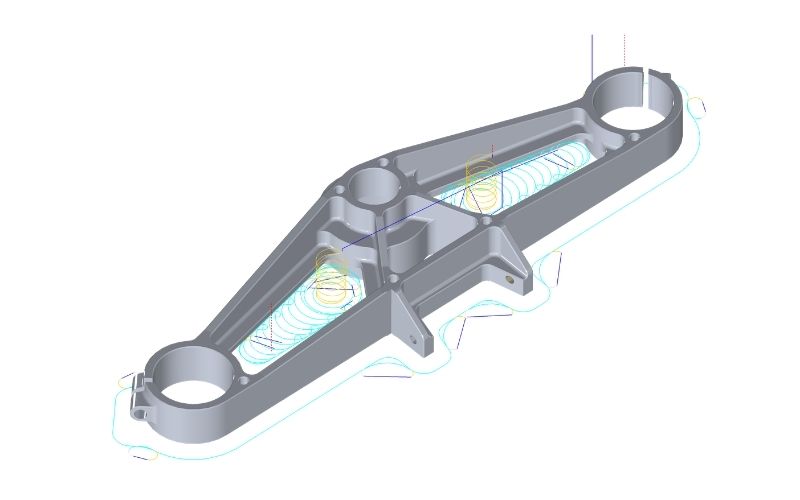
When deployed as a centralized tool, all CNC programmers in the factory, regardless of which CAM software they use, can submit geometry files to a unified processing point, receive optimized UHPT toolpaths, and integrate the results back into their machining workflow through the appropriate Post Processor for each machine.
This deployment model ensures that high-speed machining standards — including cutting strategies, chip load parameters, feed rates, and step-down values — are consistently applied across the entire machine fleet instead of depending on each programmer’s individual experience. The measurable results include shorter cycle times, more consistent surface quality, and significantly improved cutting tool life.
3.2. Reducing Investment Costs for Multiple CAM-Specific Modules
Each integrated edition of VoluMill for a specific CAM platform is licensed as a separate product. For companies operating three or four different CAM systems, the cost of purchasing and maintaining separate VoluMill licenses for each platform can far exceed the investment required for a floating VoluMill NEXION license, which allows multiple programmers to share usage without purchasing additional licenses for every workstation.
Additionally, when companies replace or add new CAM software, NEXION does not require purchasing any additional modules. The new CAM system simply needs to export compatible neutral file formats, allowing NEXION to continue processing normally. This creates a significant long-term cost advantage compared to module-based integration models.
4. Frequently Asked Questions About VoluMill NEXION
The following section summarizes common technical questions frequently raised by CNC programmers and production managers when evaluating VoluMill NEXION.
How does VoluMill NEXION differ from integrated editions in terms of algorithm?
The difference lies entirely in the data communication layer. Integrated editions read geometry directly from the host CAM environment and return results within the same system, while NEXION imports geometry through neutral files and exports CL data for manual integration. NEXION users still receive the same toolpath quality and machining performance, but through a more flexible import/export workflow instead of inline integration.
How are NEXION toolpaths transferred to CNC machines?
NEXION exports calculated results as CL data, an intermediate format describing tool position and orientation within the machining environment. This CL data is then processed through a Post Processor compatible with the target CNC controller to generate complete G-code ready for machine execution.
Does SDE Tech support integrating NEXION into existing manufacturing workflows?
Yes. This is part of SDE Tech’s standard deployment service when customers choose VoluMill NEXION. The technical team conducts a comprehensive assessment of the CAM software currently in use, the CNC machine infrastructure in the workshop, and the geometry file formats that the source CAD/CAM systems can export.
VoluMill NEXION is not necessarily the right solution for every manufacturer. However, for factories operating multi-platform CAM environments and seeking to standardize high-speed machining capabilities without restructuring their entire existing software infrastructure, it represents a technically sound and highly practical solution.
Companies interested in evaluating the implementation potential of VoluMill NEXION within their manufacturing environment, or determining whether NEXION or an integrated edition is better suited to their current CAM infrastructure, can contact the technical team at SDE Tech for free consultation and a detailed quotation.
- Website: sde.vn
- Email: sales@sde.vn
- Hotline/Zalo: 085 256 2615 – 0909 107 719