Tiếng Việt
 日本語
日本語 한국어
한국어
The modern railway industry is facing unprecedented challenges related to speed, safety, and sustainability. To develop next-generation railway systems, manufacturers can no longer rely solely on traditional physical testing methods, which are both costly and time-consuming. Implementing an integrated CAD/CAM/CAE ecosystem for the railway industry has become a fundamental engineering standard, enabling companies to execute the entire workflow — from conceptual design and manufacturing to validation and testing — within a unified and highly accurate digital environment.
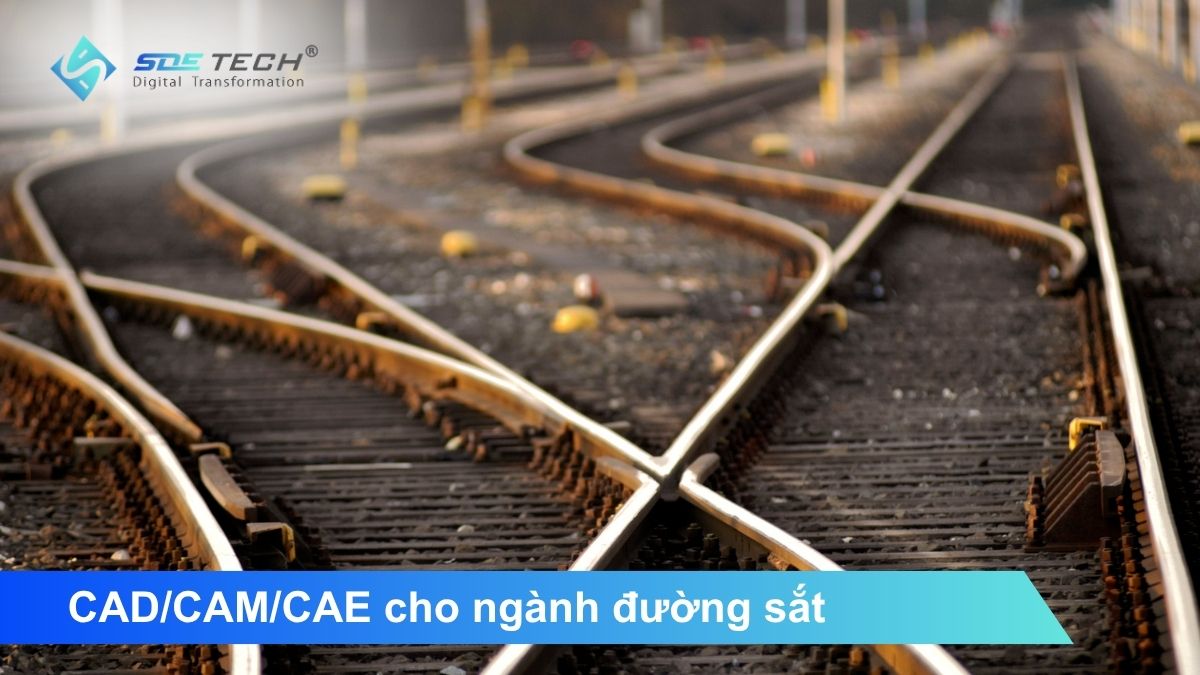
1. The Importance of a Digital Engineering Ecosystem in the Railway Industry
In heavy engineering industries such as railway manufacturing, there is no room for error. Every component — from heavily loaded wheelsets to complex suspension systems — must ensure reliable operation over decades under harsh working conditions. A comprehensive CAD/CAM/CAE ecosystem for the railway industry serves as the technological backbone that connects every stage throughout the product lifecycle.
- Ensuring Maximum Safety: Through advanced simulation technologies, potential structural and dynamic issues can be identified and resolved directly within the virtual design environment before physical manufacturing begins.
- Improving Operational Performance: Aerodynamic optimization helps reduce drag forces, leading to lower energy consumption and reduced noise levels when trains operate at high speeds.
- Accelerating R&D Processes: Replacing physical prototypes with digital prototypes allows manufacturers to significantly shorten development cycles and respond faster to large-scale railway infrastructure projects and tenders.
This integration goes far beyond traditional 3D design. It creates an iterative engineering workflow in which simulation data from CAE continuously feeds back into the CAD design process, enabling engineers to optimize products before transferring them to manufacturing through CAM systems.
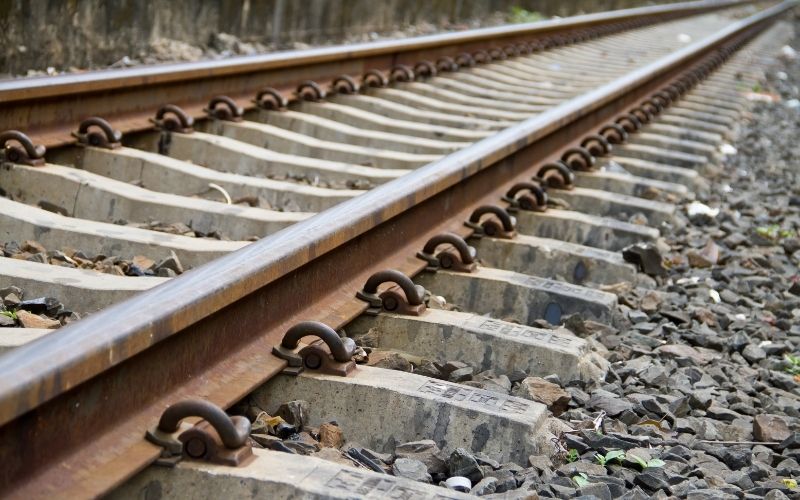
2. Transforming Railway System Design with Cloud-Based CAD
Designing a locomotive or railway carriage requires large-scale collaboration between hundreds of engineers across multiple disciplines, including mechanical engineering, electrical systems, interior design, and aerodynamics. Traditional workstation-based CAD software often struggles with real-time collaboration and the management of extremely large assemblies.
2.1. Multi-Platform Collaborative Design for Large-Scale Locomotive and Railcar Assemblies
CrownCAD — a cloud-based CAD solution — is transforming the way railway engineers collaborate. With the ability to handle assemblies containing thousands of components, CrownCAD allows multiple engineering teams to work simultaneously on a single unified model without concerns about data conflicts.
Critical systems such as bogies, automatic door mechanisms, and railcar interior layouts can be synchronized instantly, significantly reducing errors caused by outdated drawing revisions — a common issue in long-term railway projects.
2.2. Centralized Design Data Management Between R&D Centers and Manufacturing Facilities
Geographical distance between research centers and manufacturing plants is no longer a limitation. Through cloud technology, CAD/CAM/CAE data for railway engineering can be stored securely in a centralized environment and accessed from virtually any device. This capability is especially important for national railway infrastructure projects, where strict approval processes and collaboration between multiple stakeholders are required throughout the entire design and development cycle.
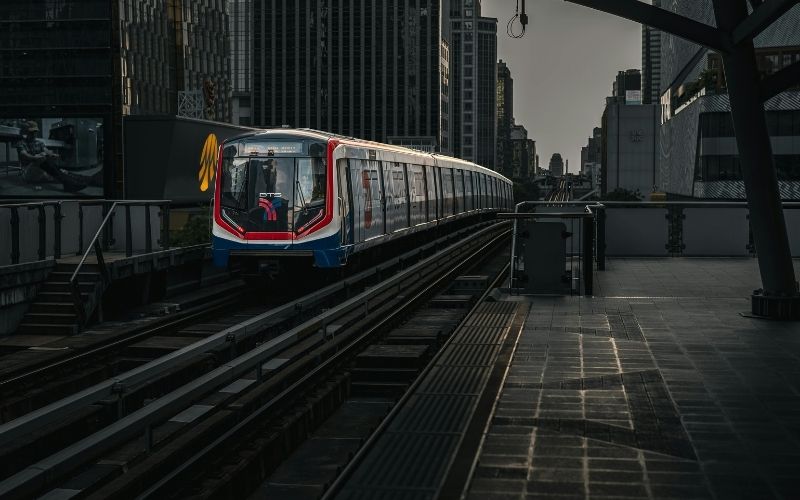
3. Advanced CAE Solutions: Dynamic Simulation and Virtual Testing
The CAE (Computer-Aided Engineering) stage represents where engineering intelligence is most clearly demonstrated. This is the critical phase used to verify whether a train will operate safely, stably, and as intended in real-world conditions.
3.1. VI-grade – Railway Dynamics Simulation and Virtual Driving Experience
VI-grade is a world-leading solution recommended by SDE TECH for addressing railway dynamics challenges. It enables highly detailed simulation of complex wheel–rail interactions.
- Stability analysis: Predicts derailment risks and evaluates train behavior when navigating curves, switches, and turnouts.
- Virtual testing: Instead of building kilometers of expensive physical test tracks, engineers can simulate full operational scenarios including track irregularities, varying load conditions, and environmental factors such as weather.
3.2. Particleworks – Aerodynamics and Locomotive Cooling System Simulation
Within the CAD/CAM/CAE ecosystem for the railway industry, thermal management of locomotive engines and high-power electronic systems is critical. Particleworks uses the Moving Particle Simulation (MPS) method to simulate lubrication oil flow and cooling fluids without requiring complex mesh generation. This approach helps optimize cooling systems and prevents overheating during continuous high-load railway operations.
3.3. Granuleworks – Simulation of Ballast and Granular Material Behavior
Railway ballast plays a crucial role in absorbing vibration and transferring loads to the ground. However, under high-speed train operation, ballast particles can shift and degrade over time. Granuleworks enables simulation of granular material behavior, allowing infrastructure engineers to predict maintenance cycles and design more effective track reinforcement strategies.
3.4. Cadmould Flex – Optimization of High-Precision Plastic Interior Components
Modern railway interiors require components that are both lightweight and highly durable. Cadmould Flex is used to simulate injection molding processes for large plastic parts such as wall panels, seat components, and driver cabin elements. This simulation helps eliminate defects such as warpage and sink marks, ensuring high-quality, production-ready interior components before tooling is manufactured.o độ chính xác lắp ghép hoàn hảo cho các linh kiện nhựa kỹ thuật.
4. Precision Railway Component Manufacturing with Advanced CAM Systems
Accurate design data must be transformed into optimized machining instructions through Computer-Aided Manufacturing (CAM) solutions.
4.1. Heavy-Duty Machining Programming with Mastercam and VoluMill
Railway components such as wheel axles and bogie frames are typically manufactured from large-scale, high-strength alloy steels. Mastercam combined with VoluMill high-speed machining technology enables rapid material removal while reducing tool load and spindle stress on heavy-duty CNC machines. This approach significantly improves machining efficiency while reducing tool wear and overall production costs.
4.2. Absolute Process Control and Collision Prevention with the MANUS Ecosystem
In railway manufacturing, a single machining error or collision can result in extremely high financial losses. The MANUS ecosystem — including MANUSsim for G-code simulation and MANUSpost for post-processor optimization — ensures that machining programs are fully validated before being executed on real machines. Every CNC movement is verified within a virtual environment, eliminating collision risks and preventing damage to expensive workpieces and machine systems.
5. Frequently Asked Questions about Railway Engineering Solutions
How does VI-grade help evaluate passenger comfort?
VI-grade enables accurate simulation of vibrations and noise transmitted from the railway track to the train carriage. Based on this data, engineers can optimize the suspension system and soundproofing materials to ensure a smooth and comfortable ride experience for passengers, even when the train operates at speeds above 300 km/h.
Why is Granuleworks simulation needed for railway ballast?
Ballast is subjected to extremely high dynamic loads from passing trains. Granuleworks helps predict deformation, erosion, and settlement of the ballast over time. This information is critical for operators to plan preventive maintenance, avoiding track degradation that could pose safety risks to trains.
Does SDE Tech support building a virtual train driving simulation lab?
Yes. SDE TECH provides a complete solution, including advanced train driving simulation software from VI-grade combined with modern hardware systems (Driving Simulator). This is a powerful tool for railway R&D institutes and driver training centers, helping personnel practice emergency scenarios in a safe virtual environment.
The integrated application of CAD/CAM/CAE solutions for the railway industry is the fastest path to achieving breakthroughs in production quality and efficiency. By fully digitizing processes from design, virtual testing to production management, enterprises can not only optimize costs but also enhance competitiveness in major infrastructure projects. With the expert support of SDE TECH, your digital transformation journey in the railway sector will become clearer, more efficient, and more sustainable than ever.
For detailed consultation on implementation roadmaps and hands-on demos of advanced railway simulation solutions, please contact our team of experts today.
- Website: sde.vn
- Email: sales@sde.vn
- Hotline/Zalo: 085 256 2615 – 0909 107 719