Tiếng Việt
 日本語
日本語 한국어
한국어
In precision machining, vibration (chatter) is one of the most significant factors affecting productivity and surface quality. Controlling vibration depends not only on machine parameters but also requires a comprehensive approach—from tool selection to CAM programming strategies. This article by SDE Tech analyzes effective methods for reducing vibration in CNC milling in order to optimize manufacturing efficiency.
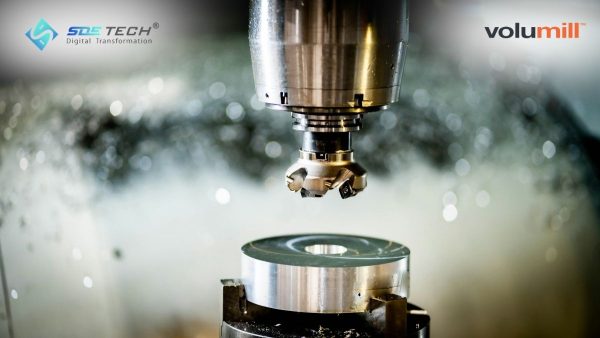
1. Overview of Vibration Phenomena in Machining
Before exploring technical solutions, it is important to understand the nature of vibration. In CNC machining, vibration refers to the relative oscillation between the cutting tool and the workpiece, which occurs when the mechanical system loses force equilibrium.
1.1. What Is Chatter and How to Identify It Through Sound and Surface Finish?
Chatter is a self-excited vibration that occurs during the cutting process. Unlike normal vibrations, machining chatter typically has high frequency and large amplitude.
The most noticeable signs are a loud screeching or buzzing sound when the tool engages the workpiece, along with wavy patterns or uneven surface roughness on the machined part. Recognizing these symptoms early allows engineers to quickly apply methods to reduce vibration in CNC milling operations.
1.2. Why Does Vibration Occur and What Are the Serious Consequences?
Vibration occurs when cutting forces change abruptly or when the vibration frequency of the machining system coincides with the machine’s natural frequency. Without proper vibration control measures, manufacturers may face several serious consequences:
- Reduced cutting tool life: Continuous impacts can chip the cutting edges and accelerate tool wear.
- Spindle damage: High-intensity vibration can transfer back to the spindle, damaging bearings and reducing machine accuracy.
- Increased scrap rate: Dimensional inaccuracies and poor surface finish can lead to rejected parts and wasted raw materials.
1.3. Main Types of Vibration: Forced, Free, and Resonant
To effectively reduce vibration in CNC milling, it is necessary to distinguish between three main types of vibration:
- Free vibration: Occurs due to temporary disturbances, such as the initial contact between the tool and the workpiece. It usually dissipates quickly thanks to the system’s damping characteristics.
- Forced vibration: Caused by repeated external forces, such as spindle imbalance or tool run-out.
- Self-excited vibration (Chatter): The most dangerous type. It arises from the interaction between the cutting process and the machine structure, creating a positive feedback loop that continuously increases vibration amplitude.

2. Causes of Vibration in CNC Milling Machines
Identifying the correct cause is the key to applying effective methods for reducing vibration in CNC milling. In practical engineering scenarios, four main groups of causes are commonly observed.
2.1. Machine Structure, Rigidity, and Workshop Environment
Overall system rigidity is the foundation of stable machining. If the machine bed is loose, joints are not properly secured, or the workshop floor cannot support the machine load, cutting forces can easily excite the system and cause vibration.
Additionally, placing CNC machines near equipment that generates strong vibrations—such as stamping presses—can also introduce external disturbances that lead to vibration during milling.
2.2. Cutting Tool Issues (Run-out and Tool Wear)
The cutting tool is the component that directly generates cutting forces. Run-out exceeding acceptable limits results in uneven load distribution across the cutting edges, leading to forced vibration.
Moreover, when a tool becomes worn, friction increases instead of effective cutting, which can push the workpiece rather than remove material efficiently. This generates heat and destabilizes the machining process.
2.3. Workpiece and Fixturing Problems
If the workpiece has a slender shape, thin walls, or insufficient clamping, it may oscillate under cutting forces.
Fixtures should provide large contact areas and strong support points to eliminate unwanted degrees of freedom and maintain stability during machining.
2.4. Improper Toolpath Strategy and Cutting Parameters
This is the most common cause in CAM programming. Incorrect settings for spindle speed (RPM), feed rate, and depth of cut (DOC) can drive the system into unstable cutting conditions, leading to vibration during CNC milling operations.
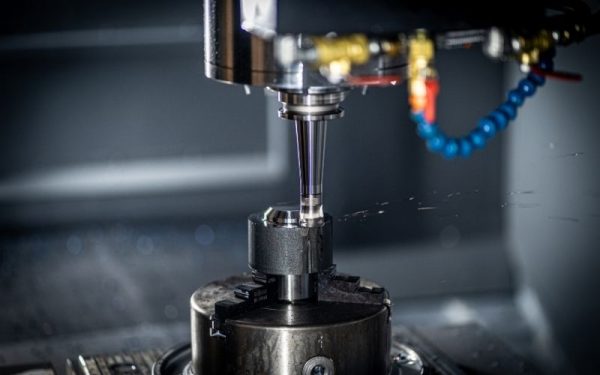
3. Solutions Using Cutting Tools and Hardware
Once the root causes have been identified, the next step is to implement hardware-based solutions. These are among the most direct and practical methods for reducing vibration in CNC milling operations.
3.1. Selecting Vibration-Damping End Mills and Variable Helix Designs
Using high-performance milling cutters with specialized geometries is a smart solution. Tools designed with a variable helix or variable pitch help break the periodic pattern of vibration, preventing resonance from developing.
This design allows the cutting process to run more smoothly and quietly, even at high spindle speeds.
3.2. Optimizing Tool Overhang and Toolholder Rigidity
A fundamental rule in machining is to keep the tool overhang as short as possible. The larger the L/D ratio (length-to-diameter), the greater the tool deflection and the higher the risk of vibration.
If deep machining is unavoidable, it is recommended to use solid carbide toolholders or specialized vibration-damping holders to improve the overall rigidity of the tooling system.
3.3. Workpiece Fixturing Techniques to Minimize Deflection and Improve Clamping Friction
Ensure that the workpiece is securely clamped with evenly distributed force. For larger parts, adding support blocks or using hydraulic fixtures can significantly improve vibration absorption.
Optimizing the friction at fixture contact points also plays an important role in reducing vibration during CNC milling operations.
3.4. Regular Inspection and Maintenance of the Spindle System
The spindle is the heart of a CNC machine. Regular inspection of bearing play and the dynamic balance of the tool holder assembly is essential.
A properly maintained spindle system minimizes internally generated forced vibrations, providing the foundation for maximum machining accuracy and stability.
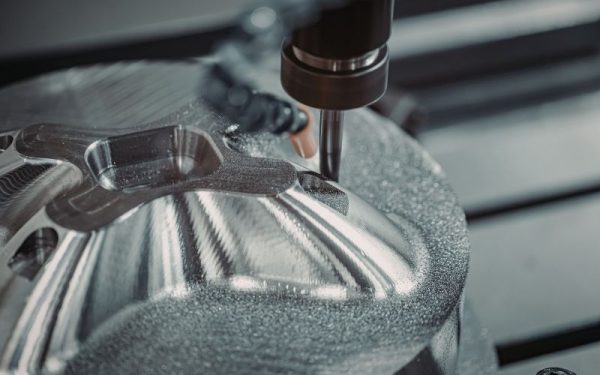
4. Advanced Solutions Through Toolpath Strategies
At SDE Tech, we believe hardware is only half of the equation. An intelligent programming strategy can solve problems that hardware alone cannot address. This approach to reducing vibration in CNC milling often delivers significantly higher productivity and machining stability.
4.1. Why Traditional Offset Toolpaths Often Cause Load Shocks
Traditional toolpaths are typically based on parallel offset contours. When the tool enters sharp corners or narrow slots, the tool engagement angle suddenly increases, causing a spike in cutting load on the tool edges. These uncontrolled load fluctuations are one of the main causes of chatter and tool breakage.
4.2. Applying High-Performance Toolpath Technology (VoluMill) to Eliminate Vibration
SDE Tech provides VoluMill, an advanced toolpath technology integrated into modern CAM software. Unlike conventional strategies, VoluMill generates smooth spiral-style toolpaths that eliminate abrupt directional changes. As a result, the cutting force remains consistent throughout the machining process, effectively removing many vibration sources caused by inefficient toolpath strategies.
4.3. Maintaining Stable Cutting Loads and a Constant Engagement Angle
The core principle of the VoluMill toolpath is its ability to maintain a constant tool engagement angle. When the contact angle remains stable, heat generation becomes uniform and the load on the spindle stays consistent. This is one of the most effective ways to reduce vibration in CNC milling, allowing manufacturers to increase the axial depth of cut (DOC) by 2–3 times compared to conventional strategies, while still maintaining smooth machine operation.
4.4. Adjusting Feed and Speed Based on Stability Lobe Diagrams
To fully optimize machining performance, engineers should understand stability lobe diagrams. Contrary to common belief, reducing spindle speed is not always the best solution. In many cases, increasing the spindle speed to a specific stable zone can completely eliminate vibration. Combining the VoluMill algorithm with properly optimized feed and speed parameters can deliver remarkable improvements in machining efficiency and stability.
5. Practical Process for Diagnosing and Resolving Machining Vibrations
To make these concepts easier to apply in real production environments, we summarize a quick troubleshooting workflow for handling vibration issues on the shop floor.
5.1. Quick Checks When the Machine Starts Producing Unusual Noise
When abnormal vibration or noise appears during machining, follow these steps:
- Stop machining immediately: Inspect the machined surface to identify vibration marks or chatter patterns.
- Check tool clamping: Ensure that the toolholder and cutting tool are properly tightened and secure.
- Adjust the feed rate: Increase or decrease the feed rate by 10–20% to see whether the noise or vibration changes.
- Inspect tool wear: If the tool has exceeded its recommended cutting time, replace it to eliminate tool geometry deterioration as a potential cause.
5.2. Special Considerations for Machining Thin-Walled Parts
Machining thin-walled components is one of the biggest challenges in vibration control. An effective method for reducing vibration in CNC milling for these parts is to apply smaller step-down strategies or use temporary support materials such as wax or dedicated fixtures.
In particular, using VoluMill toolpaths, which generate low radial cutting forces, helps protect thin walls from deformation and vibration, ensuring higher dimensional accuracy and surface quality.
6. Frequently Asked Questions About CNC Machine Vibration
Below are answers to some of the most common questions that SDE Tech customers frequently encounter.
6.1. How Can You Detect Tool Vibration Without Inspecting the Surface?
You can identify vibration through distinctive high-frequency squealing sounds and vibrations transmitted to the machine enclosure or control panel. Some modern CNC machines are equipped with accelerometer sensors that can detect vibration levels and display chatter alerts directly on the control screen.
6.2. Can Increasing Cutting Speed Help Reduce Vibration?
Yes, in some cases it can. As mentioned in the stability lobe diagram concept, increasing the spindle speed may shift the excitation frequency away from the machine’s resonance zone. However, this adjustment should be performed carefully and based on proper engineering calculations to avoid overloading the tool or machine.
6.3. How Does VoluMill Software Reduce Vibration Compared to Conventional Milling?
VoluMill does not change the cutting tool itself; instead, it changes how the tool engages with the material. By maintaining a constant cutting load and avoiding sudden impacts or sharp directional changes, VoluMill eliminates many of the force spikes that typically cause vibration during machining.
6.4. When Should You Replace a Cutting Tool to Prevent Machine Vibration?
When you notice increased cutting forces—often visible through the spindle load indicator—or when the machined surface begins to show roughness or irregular wear patterns, it is a clear signal that the tool should be replaced. Replacing worn tools at the right time helps ensure that vibration reduction strategies in CNC milling remain effective and machining quality is maintained.
Reducing vibration in CNC milling requires a combination of mechanical expertise and advanced software technologies. By optimizing both hardware components (cutting tools, toolholders, fixturing) and software strategies such as VoluMill toolpaths, manufacturers can effectively minimize vibration while improving machine lifespan and product quality.
SDE Tech is always ready to support businesses in consulting and implementing digital transformation and production optimization solutions. If you are experiencing vibration issues or looking to improve machining performance, feel free to contact our engineering team for an on-site assessment and the most suitable solution.
SDE Tech Contact Information:
- Website: sde.vn
- Email: sales@sde.vn
- Hotline/Zalo: 085 256 2615 – 0909 107 719