Tiếng Việt
 日本語
日本語 한국어
한국어
In the Industry 4.0 era, factory digitalization is no longer an option but has become a mandatory requirement for manufacturing companies to survive and grow. Transitioning from a manual operational model to a smart manufacturing system enables businesses to take control of their data, optimize resources, and respond flexibly to the constant changes of the global market.
1. Overview of the Digital Factory Trend
Technological advancement has redefined what an efficient manufacturing facility looks like.
1.1 What Is Factory Digitalization?
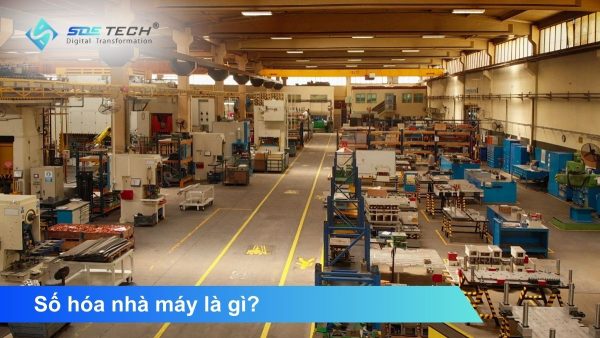
Factory digitalization is the process of applying digital technologies to connect, integrate, and optimize every stage of manufacturing operations, from product design and supply planning to real shop-floor execution. The ultimate goal is to build a Digital Factory—an environment where data flows seamlessly across systems, enabling companies to make accurate, data-driven decisions rather than relying on intuition or fragmented information.
1.2 Five Key Differences Between Traditional Factories and Digital Factories
| Aspect | Traditional Factory | Digital Factory / Smart Factory |
|---|---|---|
| Data Management | Data is fragmented, stored in paper documents or scattered Excel files. | Centralized data connectivity with real-time updates. |
| Decision Making | Based on experience and historical data. | Based on data analytics and AI-driven forecasting. |
| Machine Maintenance | Periodic maintenance or reactive repairs after breakdowns. | Predictive maintenance based on machine condition monitoring. |
| Flexibility | Production lines are difficult to change when product designs change. | Highly flexible systems that can be reconfigured quickly. |
| Productivity Monitoring | Manual tracking with delayed reporting. | Automated OEE monitoring via real-time dashboards. |
1.3. Organizational Culture Shift When Adopting Digital Technologies
Digitalization is not only about changing machines—it is about changing mindsets. This transformation requires data transparency and close collaboration between departments (R&D, Production, Quality, Logistics). Employees need to be trained to shift from manual operational roles to roles focused on system monitoring and data analysis.

2. Key Technological Characteristics of an Industry 4.0 Digital Factory
For a factory to truly be considered smart, it must be built upon several core technological foundations.
2.1 Comprehensive Connectivity through Industrial IoT (IIoT)
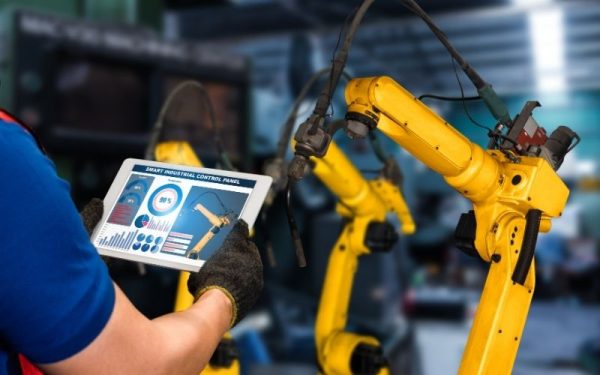
Industrial Internet of Things acts as the nervous system of a smart factory. Sensors installed on machines collect operational data such as temperature, pressure, vibration, and machine status, and transmit this information to a centralized management platform.
2.2 Digital Twin Technology for Simulating the Entire Product Lifecycle
A Digital Twin is a virtual model that accurately replicates a real-world physical object or system. Before manufacturing a component or installing a new production line, companies can perform virtual simulations to identify design flaws or process bottlenecks. This approach significantly reduces risk and the cost of physical testing.
2.3 Artificial Intelligence and Advanced Data Intelligence
Artificial Intelligence helps process the massive volume of data generated in a factory to uncover hidden patterns and insights. For example, AI can analyze CNC machining parameters and provide early warnings when cutting tools are approaching wear limits, helping maintain product surface quality and optimize machining performance.
2.4 Predictive Maintenance Optimization
Instead of relying on fixed maintenance schedules, digital factories can implement Predictive Maintenance. Using data from sensors such as vibration and temperature, the system can predict when a machine component is likely to fail. This enables companies to perform planned maintenance and avoid unexpected downtime that could disrupt the supply chain.
2.5 Augmented Reality (AR/VR) for Assembly Guidance and Training
Augmented Reality assists operators by displaying visual 3D technical instructions directly on smart glasses or tablets. This technology helps reduce errors when assembling complex components and significantly shortens training time for new employees.
3. Strategic Benefits of Factory Digitalization for Manufacturing Enterprises
3.1 Real-Time OEE Monitoring and Effective Productivity Management
The Overall Equipment Effectiveness (OEE) indicator is automatically calculated as:
OEE = Availability × Performance × Quality
By monitoring OEE in real time, managers can immediately identify which machines are underperforming or experiencing excessive downtime, allowing timely interventions to improve production efficiency.
3.2 Energy Management Optimization (Electricity, Gas, Water) to Reduce Costs
Digitalization enables companies to identify areas of energy waste across the factory. Automatically adjusting lighting systems, HVAC systems, or air compressors based on real operational demand can reduce annual energy costs by 10% to 20%.
3.3 Automated Environmental Monitoring and Alert Systems
In sensitive industries such as electronics manufacturing or food production, maintaining stable temperature and humidity levels is critical. A digital monitoring system can automatically track, alert, and adjust environmental parameters to ensure that production conditions always meet required standards.
3.4 Improved Product Quality Through Data Consistency
When design data from CAD/CAM systems is directly connected to manufacturing machines and quality control systems, errors caused by manual data entry are eliminated. Each product can have a complete digital production history, enabling full traceability in case quality issues arise.
3.5 Greater Flexibility in Responding to Supply Chain Changes
A digitalized factory can connect data with suppliers and customers, creating a more responsive production ecosystem. When there are changes in customer orders, the production planning system can automatically recalculate schedules, ensuring deadlines are met while optimizing available resources.
4. Core Software Solutions That Enable a Digital Factory
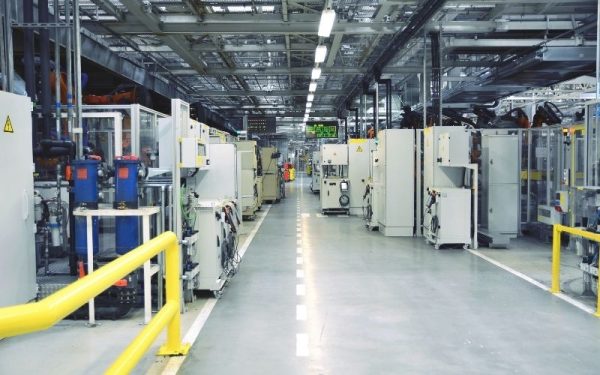
SDE Tech provides consulting and implementation for world-class software solutions that help manufacturers build a comprehensive digital manufacturing ecosystem.
4.1 Product Lifecycle Management System (PLM – Teamcenter)
A Teamcenter platform manages all product-related data from initial concept to end-of-life. Teamcenter synchronizes data across departments, ensuring that everyone works with the latest design version. This helps reduce errors, improve collaboration, and shorten time-to-market for new products.
4.2. Manufacturing Execution System (MES – Opcenter)
MES acts as a bridge between enterprise management systems (ERP) and shop-floor machines. The Opcenter solution helps manage production orders, track manufacturing progress, control product quality, and collect detailed operational data down to the minute.
4.3. Industrial IoT Platforms for Machine Data Collection (SCADA / MindSphere)
To truly achieve digitalization, machine data must be collected and analyzed. Industrial IoT platforms enable different types of machines—regardless of brand—to be connected to a unified management system, creating the foundation for advanced data analytics and predictive insights.
5. Roadmap and Trends for Factory Digitalization in Vietnam
5.1 The Shift Toward Smart Manufacturing
Many FDI companies operating in Vietnam are leading the adoption of the Smart Factory model to maintain global manufacturing standards. This trend creates both challenges and opportunities for local manufacturers. To participate more deeply in the global value chain, domestic companies must accelerate their digital transformation initiatives.
5.2 Assessing Digital Readiness
Before starting the digitalization journey, companies should evaluate their digital readiness by considering several key factors:
- Can existing machines connect and share data?
- Are employees ready to adopt new digital technologies?
- Have operational processes been standardized?
This assessment helps companies define realistic implementation strategies and avoid costly transformation failures.
5.3 Practical Example: A Successful Implementation Roadmap
A typical factory digitalization roadmap often follows four main phases:
Phase 1: Digitalize engineering data and implement centralized data management (PLM).
Introduce platforms such as Teamcenter to manage product data across departments.
Phase 2: Connect machines and monitor productivity (IoT & OEE).
Use Industrial IoT systems to collect machine data and monitor performance indicators such as Overall Equipment Effectiveness.
Phase 3: Deploy a Manufacturing Execution System (MES). Implement systems like Opcenter to manage production orders and monitor shop-floor operations.
Phase 4: Apply AI and advanced data analytics. Use Artificial Intelligence to optimize processes, improve predictive maintenance, and enhance decision-making based on real-time production data.
6. Frequently Asked Questions About Factory Digitalization
6.1 Should small and medium-sized enterprises (SMEs) invest in factory digitalization?
Yes. SMEs can start by digitalizing specific processes, such as CAD/CAM data management or OEE monitoring, to quickly see measurable improvements before expanding toward a full Smart Factory implementation.
6.2 What is the typical return on investment (ROI) period?
On average, factory digitalization projects deliver ROI within 18 to 36 months, depending on the project scale and the level of process optimization achieved.
6.3 Will factory digitalization eliminate jobs for workers?
Digitalization does not eliminate human roles—it transforms them. Workers are freed from repetitive and hazardous tasks and can transition to working with advanced control systems and data-driven operations, creating higher-value contributions.
6.4 What hardware infrastructure is required?
Companies need a stable industrial network infrastructure, control computers with appropriate configurations, and sensors or data converters for legacy machines.
Factory digitalization is a long-term journey that requires strategic investment in both technology and implementation planning. Choosing the right consulting partner with deep expertise can help businesses avoid costly mistakes and accelerate the digital transformation process.
With extensive experience delivering digital transformation solutions to manufacturing companies across Vietnam, SDE Tech is committed to supporting businesses on their journey toward building a smart factory.SDE Tech does not just provide software—we provide a strategic roadmap to elevate your manufacturing capabilities. Contact SDE Tech today for a factory digitalization consultation and assessment!
- Email: sales@sde.vn
- Hotline/Zalo: 085 256 2615 – 0909 107 719
Factory Digitalization Consultation: