Tiếng Việt
 日本語
日本語 한국어
한국어
In today’s modern CNC machining landscape, increasing pressure on delivery timelines and production costs is driving manufacturers to adopt smarter and more efficient cutting strategies. High Efficiency Machining (HEM) has emerged as a game-changing milling approach, enabling exceptionally high material removal rates without compromising tool integrity. But what exactly is HEM, and how can your workshop successfully adopt and master this technology?
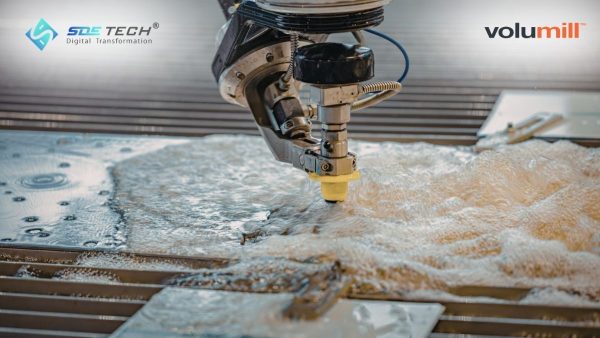
1. Overview of High Efficiency Machining (HEM)
High Efficiency Machining is not simply about running machines at higher speeds; it is a machining strategy that combines mathematical toolpath programming with cutting mechanics to achieve optimal performance.
1.1. HEM Concept and Working Principle
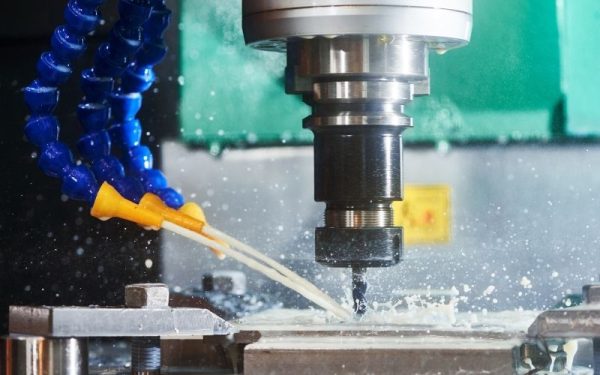
High Efficiency Machining (HEM) is a rough milling strategy that utilizes a small radial depth of cut (ae) while maximizing the axial depth of cut (ap).
The core principle of HEM is based on the concept of Radial Chip Thinning. When the radial engagement (ae) is reduced, the actual chip thickness becomes smaller than the theoretical value. To compensate for this, engineers can significantly increase the feed rate to maintain the target chip load. This approach allows the cutting tool to operate more smoothly, reducing friction and distributing heat evenly along the entire cutting edge, ultimately improving tool life and machining stability.
1.2. Key Differences Between HEM, HSM, and Conventional Milling
| Criteria | Conventional Milling | High Speed Machining (HSM) | High Efficiency Machining (HEM) |
|---|---|---|---|
| Axial Depth of Cut (ap) | Low / Medium | Very low | High (utilizes full flute length) |
| Radial Depth of Cut (ae) | Large (50%–100% of tool diameter) | Medium | Very small (5%–15%) |
| Feed Rate (F) | Low | Very high | Very high |
| Main Objective | General machining | High surface finish | Maximum Material Removal Rate (MRR) |
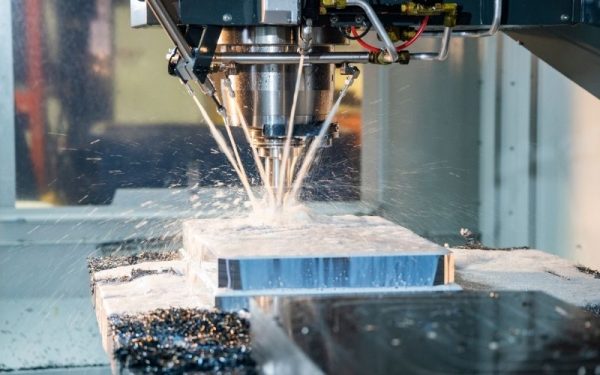
2. Key Advantages of High Efficiency Machining (HEM)
Why has HEM become the new standard in professional CNC machining shops?
2.1. Reduce Machining Time by Up to 70% and Maximize Material Removal Rate (MRR)
The most critical metric for evaluating machining efficiency is the Material Removal Rate (MRR), calculated as:
MRR = ap \cdot ae \cdot Vf
Although the radial depth of cut (ae) is small, HEM compensates by utilizing the full flute length (high ap) and extremely high feed rates (Vf). This combination significantly increases MRR compared to conventional milling. In real-world applications—such as those implemented by SDE Tech—rough machining time can be reduced by up to 70%, delivering substantial gains in productivity and cost efficiency.
2.2. Even Cutting Force Distribution Extends Tool Life
In conventional milling, cutting forces are concentrated at the tool tip, often leading to localized wear and premature tool failure. HEM, on the other hand, distributes cutting forces evenly along the entire cutting edge. This results in better heat dissipation and eliminates stress concentration at the tool tip. As a result, tool life can be increased by 300% to 500%, significantly reducing tooling costs.
2.3. Reduced Heat Load and Enhanced CNC Spindle Protection
With a low tool engagement angle, each cutting edge remains in contact with the material for only a short duration per revolution. This allows chips to evacuate efficiently, carrying away most of the generated heat. Moreover, the consistent and stable cutting forces eliminate sudden load spikes, helping to protect the CNC machine spindle and its bearings. Over time, this contributes to lower maintenance costs and improved machine longevity.
3. Practical Applications of HEM in Precision Machining
3.1. High-Speed Roughing of Hard-to-Cut Materials
HEM is particularly effective when machining difficult materials such as Titanium, stainless steel (304/316), and high-hardness alloy steels. Its superior heat control capability helps prevent work hardening, a common issue when machining stainless steel using conventional methods. As a result, HEM ensures more stable cutting conditions, improved tool performance, and consistent machining quality even in the most demanding applications.
3.2. An Ideal Solution for Key Industries
- Mold & Die Industry: Enables rapid roughing of deep cavities with high efficiency and precision.
- Automotive Industry: Optimizes machining of complex components in high-volume production environments.
- Aerospace Industry: Effectively processes lightweight yet high-strength alloys, meeting stringent performance and reliability requirements.
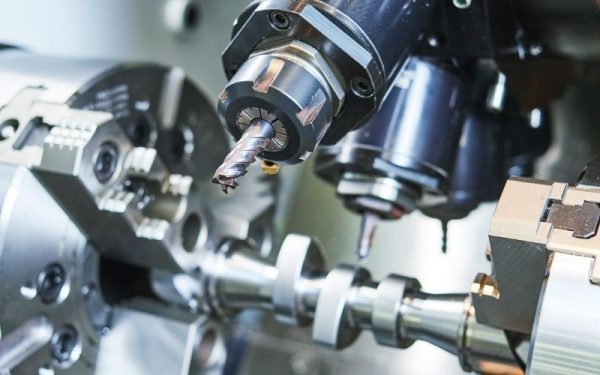
4. Key Factors for Successful High Efficiency Machining (HEM)
High Efficiency Machining is the result of a perfect synergy between rigid hardware and intelligent software algorithms.
4.1. Cutting Tool Selection and Workholding Setup
To successfully implement HEM, it is essential to use high-performance end mills with heat-resistant coatings and an appropriate number of flutes (typically 4–7 flutes to optimize chip evacuation). Equally important is the rigidity of the setup. Both the workholding system and tool holder must exceptional stability to eliminate vibration, especially when operating at high feed rates. This ensures consistent cutting performance and prevents premature tool wear or failure.
4.2. Why CAM Programming is the Decisive Factor
CNC machines cannot inherently execute HEM strategies without proper programming. If manual programming or conventional milling cycles are used, tools are highly prone to failure—especially in tight corners where tool engagement can spike. This is where advanced CAM algorithms become critical. They are designed to maintain a constant tool load, preventing sudden increases in cutting forces and ensuring safe, efficient machining.
4.3. VoluMill: A Leading Toolpath Engine for HEM
VoluMill is a world-class toolpath engine provided by SDE Tech, specifically developed for High Efficiency Machining. Unlike conventional toolpaths, VoluMill generates smooth, flowing curves without abrupt directional changes. It continuously adjusts the feed rate to ensure that each cutting edge removes a consistent volume of material—whether in straight paths or tight corners.
4.4. Seamless Integration of VoluMill for Constant Tool Load
The VoluMill solution integrates seamlessly with leading CAM platforms such as NX CAM and other systems. This integration enables full control over the rough machining process:
- Maintains a constant load on the cutting tool
- Automatically calculates optimal toolpaths based on machine configuration and material
- Significantly reduces programming time with pre-optimized cutting parameters
By combining advanced CAM technology with proper tooling and machine setup, manufacturers can fully unlock the potential of HEM and achieve superior machining performance.
5. Frequently Asked Questions about High Efficiency Machining (HEM)
5.1. Can HEM be applied to older CNC machines?
Yes. In fact, HEM reduces the load on the spindle, making it highly suitable for improving productivity on older CNC machines with lower power or less-than-ideal rigidity.
5.2. Is it necessary to use expensive cutting tools for HEM?
While premium end mills deliver the best performance, HEM can still significantly extend tool life even when using standard tools. This is due to improved heat distribution and consistent cutting load compared to conventional machining methods.
5.3. How much cost savings can VoluMill deliver?
Based on real-world projects implemented by SDE Tech, manufacturers can achieve up to 50% reduction in tooling costs and 200%–300% increase in machine productivity. This translates into a rapid return on investment (ROI) for any machining workshop.
High Efficiency Machining (HEM) is no longer a future concept—it is a practical key to enhancing competitiveness for today’s manufacturing businesses. By combining advanced machining strategies with intelligent software solutions like VoluMill, companies can fully optimize their existing resources.
Want to experience the power of HEM on your own CNC machine? Contact SDE Tech today for expert consultation and register for a live demo of VoluMill to see the results firsthand!
- Website: https://sde.vn/
- Email: sales@sde.vn