Tiếng Việt
 日本語
日本語 한국어
한국어
In modern manufacturing, companies can no longer operate efficiently by relying on standalone design software or isolated machining tools. The prevailing trend is to build an integrated CAD/CAM/CAE ecosystem that connects the entire product lifecycle—from design and simulation to CNC programming and production management. Let SDE Tech guide you through this approach in the article below.
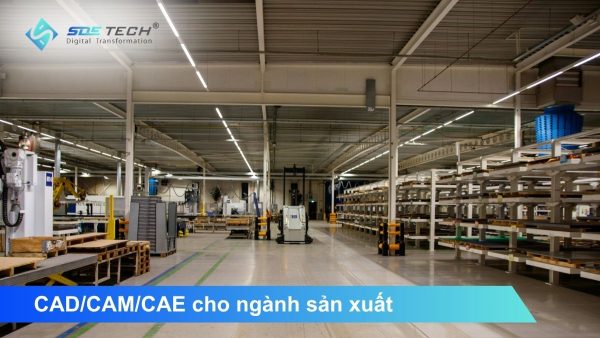
1. The Importance of CAD/CAM/CAE in Manufacturing
In today’s manufacturing landscape, companies are not only required to produce parts that meet specifications, but also to deliver them faster, with higher accuracy, and at lower cost. As a result, CAD/CAM/CAE has become an indispensable technology trio in product development.
CAD enables businesses to create precise and structured digital design models. CAM transforms those designs into executable CNC machining programs. CAE allows engineers to validate product performance through simulation before physical production, helping identify risks early and reduce reliance on costly prototyping. When these three components are integrated, companies can significantly shorten the cycle from concept to finished product.
The true value of CAD/CAM/CAE lies not only in digitizing processes, but in establishing a seamless data flow across design, engineering, simulation, and manufacturing. Instead of working with fragmented datasets, teams can collaborate on a unified platform—minimizing errors and improving cross-functional efficiency.
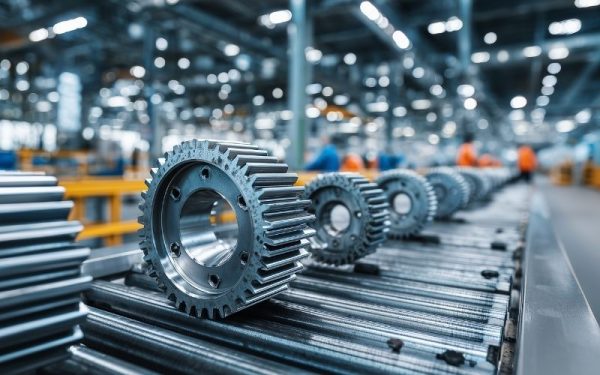
2. CAD: The Foundation for Product and Manufacturing Process Design
Within the CAD landscape, two notable solutions are NX and CrownCAD. NX by Siemens is an integrated CAD/CAM solution designed to unify design and manufacturing within a single digital platform. In contrast, CrownCAD is a cloud-native CAD platform that runs directly in the browser, enabling real-time collaboration and intelligent version control—making it well-suited for organizations seeking greater flexibility and distributed workflows.
For manufacturing companies, CAD goes far beyond basic geometry creation. It serves as the starting point of the entire engineering value chain, where geometric data, dimensions, assemblies, and technical drawings are created and continuously leveraged across CAM, CAE, and PLM systems. When CAD data is well-structured and managed, downstream processes can significantly reduce data translation time and minimize errors.
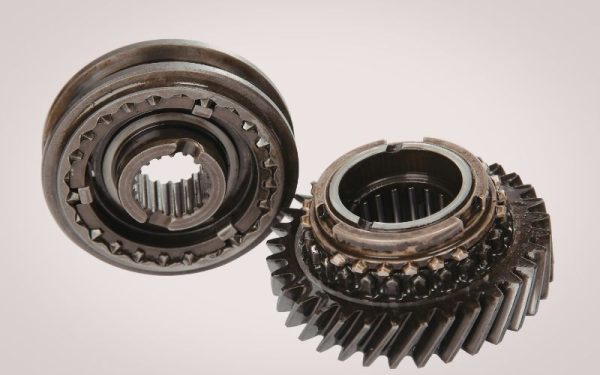
3. CAM: Optimizing CNC Machining, Reducing Cycle Time and Programming Errors
In the CAM space, key solutions include Mastercam, VoluMill, MANUSsim, MANUSpost Developer, and MANUSsim Optimize.
Mastercam is recognized as one of the leading CAD/CAM software solutions for CNC programming. VoluMill specializes in high-performance rough milling, focusing on fast and stable material removal.
MANUSpost Developer is a cloud-based platform for developing and customizing post processors, while MANUSsim provides realistic CNC simulation to validate NC programs before execution. MANUSsim Optimize focuses on improving NC programs by reducing air cuts, eliminating unnecessary movements, and shortening cycle time.
The strength of this CAM ecosystem lies not only in toolpath generation but also in providing full control over post-processing and pre-production simulation.
For example, VoluMill automatically controls material removal rates to prevent tool overload. MANUSpost Developer enables users to work with extensive post libraries and customize them for specific CNC machines. MANUSsim Optimize goes further by directly analyzing NC programs to improve non-cutting movements—enhancing real-world efficiency without altering the original CAM setup.
4. CAE: Simulation for Pre-Production Validation
In the CAE domain, three highly relevant solutions are Particleworks, Granuleworks, and Simcenter STAR-CCM+.
Particleworks uses the MPS method to simulate fluids such as water and oil with complex free-surface behavior, making it ideal for advanced flow analysis in manufacturing. Granuleworks is a DEM-based simulation tool for particle systems, suitable for applications like mixing, conveying, and filling. Simcenter STAR-CCM+ is a comprehensive CFD and multiphysics simulation platform for analyzing real-world operating conditions. For manufacturers, CAE serves as a critical validation layer before investing in molds, machinery, or production lines.
Particleworks is particularly effective for lubrication, churning, aeration, and thermal transfer simulations. Granuleworks is well-suited for powders and bulk materials. STAR-CCM+ excels in CFD, heat transfer, fluid-structure interaction, and multiphysics simulations. With these tools, companies can identify risks earlier, reduce physical testing, and make more informed design decisions.
5. How Should Manufacturers Build a Software Ecosystem?
An effective system does not necessarily require deploying all software solutions at once, but it must ensure seamless data continuity across all layers. Depending on specific needs, manufacturers can choose NX or CrownCAD for CAD; Mastercam, VoluMill, MANUSsim, MANUSpost Developer, and MANUSsim Optimize for CAM; and Particleworks, Granuleworks, or STAR-CCM+ for CAE. The key is that these tools must align with and support the company’s workflows—rather than creating further fragmentation.
With this model, CAD establishes the design foundation, CAM ensures stable and efficient machining, and CAE enables early validation. This is how modern manufacturers optimize the product lifecycle, reduce waste, and enhance overall competitiveness.
6. Frequently Asked Questions
6.1 Why should manufacturers use integrated CAD/CAM/CAE solutions?
Because integration reduces rework, maintains data continuity, accelerates the transition from design to manufacturing, and minimizes errors between departments.
6.2 Is CAE mandatory before production?
Not mandatory, but highly recommended in early stages. CAE helps detect risks early, reduce prototyping costs, and improve product reliability before actual manufacturing.
6.3 Do small businesses need CAD/CAM/CAE?
Yes. Even small manufacturers benefit from reduced errors, shorter development cycles, and less dependence on physical testing when CAD/CAM/CAE is properly implemented.
From a practical manufacturing perspective, CAD/CAM/CAE is no longer a theoretical concept but a concrete strategy to accelerate innovation, reduce errors, and optimize costs. With this direction, SDE Tech is ready to support businesses in selecting and implementing the most suitable solutions for real-world design, simulation, and machining challenges:
- Website: sde.vn
- Email: sales@sde.vn
- Hotline/Zalo: 085 256 2615 – 0909 107 719