Tiếng Việt
 日本語
日本語 한국어
한국어
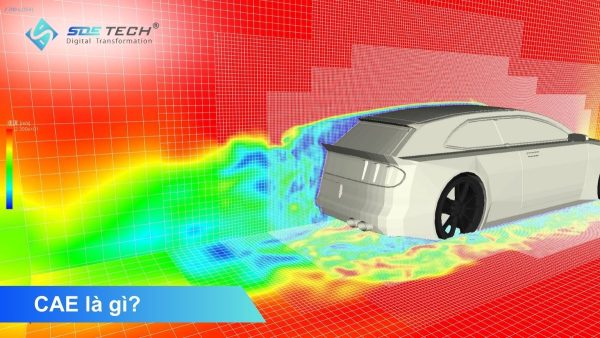
In the era of smart manufacturing, ensuring that a product performs flawlessly before it ever leaves the drawing board is a matter of survival for every enterprise. To achieve this, engineers cannot operate without the support of CAE. So what exactly is CAE, where does the true power of Computer-Aided Engineering lie, and why has it become the “heart” of the modern product development process? Let’s explore these questions in detail with SDE Tech in the article below.
1. Exploring the Concept of CAE – What Is Computer-Aided Engineering?
CAE is an abbreviation for Computer-Aided Engineering. It refers to the use of computer software to simulate, analyze, and validate the performance of engineering designs.
If CAD is considered the process of creating the external shape (the “body”), then CAE is the process of breathing life into the product and testing its internal strength. Instead of manufacturing costly and time-consuming physical prototypes, CAE allows engineers to build a “virtual laboratory.” In this environment, physical factors such as stress, temperature, pressure, and dynamics are calculated using complex algorithms, enabling accurate predictions of how a product will behave under real-world conditions.
At its core, Computer-Aided Engineering is not just about software—it is the combination of physics knowledge, discrete mathematics, and the powerful computational capabilities of computers to optimize engineering solutions.
2. Core Analysis Methods in the CAE System
To solve a wide range of engineering problems, CAE systems are divided into several specialized analysis domains:
2.1 Finite Element Analysis (FEA)
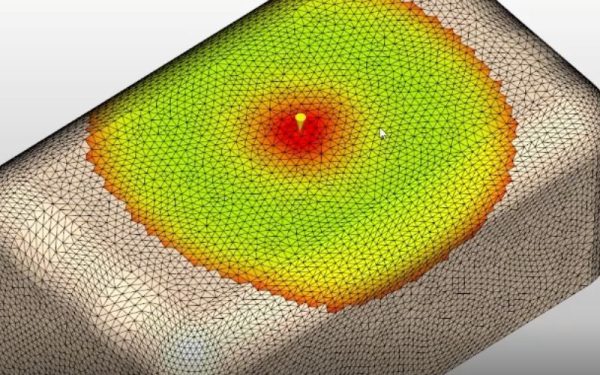
This is the most widely used method in CAE. FEA breaks down complex objects into millions of smaller, simple elements (finite elements) to calculate strength, stress, deformation, and vibration. Engineers use FEA to answer the critical question: “Will the product break, fail, or deform excessively under applied loads?”
2.2 Computational Fluid Dynamics (CFD)
CFD focuses on simulating fluid and gas flow, heat transfer, and aerodynamic interactions. From optimizing the cooling performance of electronic components to reducing aerodynamic drag in automobiles, CFD is an indispensable tool.
2.3 Multi-Body Dynamics (MBD)
This method analyzes motion and force interactions between components in complex assemblies (such as engines or vehicle suspension systems). MBD helps ensure smooth motion, collision-free operation, and maximum mechanical efficiency.
3. Strategic Benefits of Applying CAE in Manufacturing
Implementing Computer-Aided Engineering delivers direct and substantial economic value to businesses:
- Reduced prototype testing costs: Manufacturing and testing a real vehicle or machine prototype can cost billions of VND. CAE enables thousands of virtual tests, minimizing the need for physical prototypes.
- Early risk detection: CAE identifies potential engineering flaws at the concept stage. Fixing issues on a computer may take only hours, whereas fixing them after tooling production can cause severe financial losses.
- Improved performance and reliability: Products are validated under extreme scenarios (impacts, high temperatures, high pressures) that are difficult to repeatedly recreate in real testing.
- Shortened R&D cycles: Engineers can design and simulate in parallel, accelerating time-to-market compared to competitors.
4. Breakthrough Computer-Aided Engineering Technology Trends in 2026
By 2026, CAE is undergoing revolutionary changes:
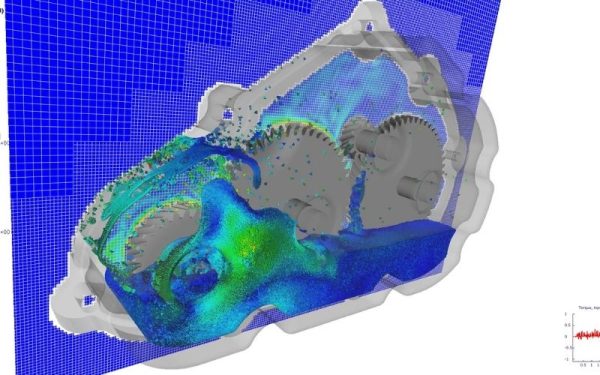
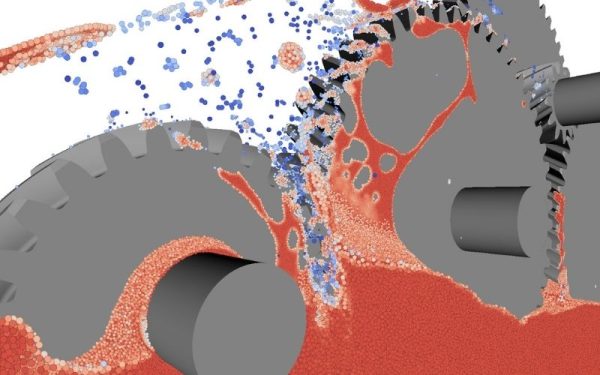
- Meshless Simulation: Traditional methods require time-consuming meshing. New approaches (such as particle methods) eliminate this step, allowing direct computation on geometric data—especially effective for complex fluid problems.
- Digital Twin & Virtual Prototyping: Creating a perfect digital replica enables real-time monitoring and failure prediction of products operating in the real world through simulation models.
- AI and Machine Learning Applications: AI predicts simulation outcomes based on historical data without running heavy mathematical solvers, reducing computation time from days to minutes.
5. Leading and Trusted CAE Software Solutions Today
In 2026, the market recognizes several specialized solutions offering exceptional accuracy for specific industries:
5.1 Particleworks – Meshless Fluid Simulation (MPS)
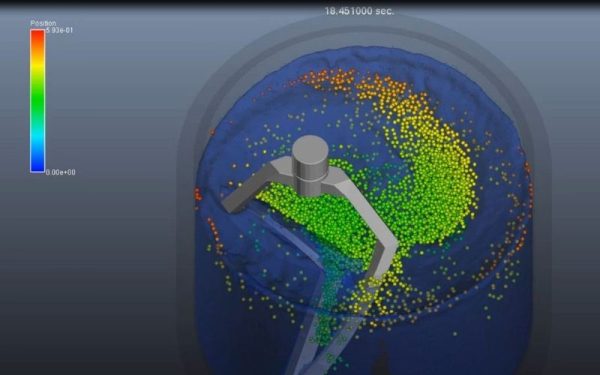
Particleworks represents the future of CFD. Using the Moving Particle Simulation method, it excels at simulating complex free-surface fluid phenomena such as oil splash lubrication in gearboxes, vehicle water wading, and food or chemical mixing processes.
5.2 Cadmould Flex – Injection Molding Simulation Specialist
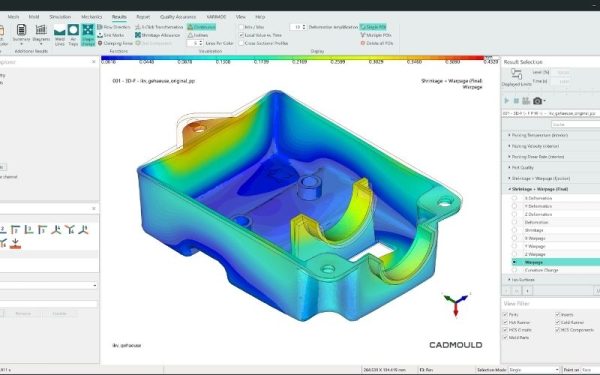
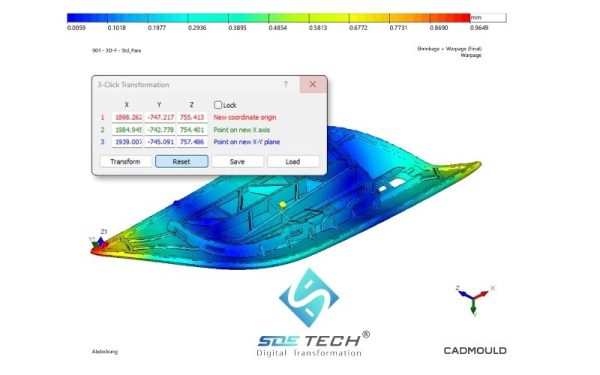
In the plastics industry, Cadmould Flex is the gold standard. It predicts the entire mold filling process, analyzes shrinkage and warpage, and optimizes cooling systems—saving plastic manufacturers thousands of trial-molding hours.
5.3 VI-grade – The Pinnacle of Driving and Vehicle Dynamics Simulation
VI-grade is a leading solution for the automotive and motorcycle industries. Its strength lies in connecting virtual simulation with real-world experience through driving simulators. Major OEMs use VI-grade to fine-tune driving feel, safety, and performance on virtual tracks before manufacturing any components.
5.4 EVO (Advanced Simulation) – Advanced Optimization Solutions
The EVO product line focuses on multi-objective optimization and solving complex physical problems. It is a powerful tool for engineers seeking the optimal balance between performance and material cost.

6. Standard CAE Project Implementation Process in Enterprises
A professional Computer-Aided Engineering workflow typically includes three main stages:
- Pre-processing: Model import, geometry cleanup, material definition (steel, aluminum, plastics, etc.), and boundary condition setup (loads, temperatures, constraints).
- Solving: The computer runs solvers that perform billions of matrix calculations to solve the governing physical equations.
- Post-processing: Results are visualized as contour plots, charts, or motion simulation videos. Engineers analyze critical areas (high-stress regions) and propose design improvements.
7. Criteria for Selecting the Right CAE Software for Enterprises
CAE investment is significant, so businesses should consider:
- Accuracy: Are the algorithms validated by international organizations and consistent with experimental results?
- Infrastructure requirements: Does the software require high-end workstations, or does it support cloud computing to reduce hardware costs?
- Support capability: Can the provider deliver in-depth technical training to help the enterprise master the technology?
8. SDE Tech – A Specialized Computer-Aided Engineering Solution Consultant
In Vietnam, SDE Tech (SDE Digital Technology Co., Ltd.) is proud to be a pioneer in providing digital transformation solutions for design and simulation. With a team of highly skilled engineers, we offer not only software licenses but also comprehensive consulting solutions:
- Technology transfer of simulation solutions from world-renowned vendors such as VI-grade, Particleworks, and Cadmould Flex.
- Engineer training programs from basic to advanced levels.
- Long-term partnership with enterprises to solve the most challenging real-world engineering problems.
9. Frequently Asked Questions About CAE
9.1 Are CAE simulation results truly reliable?
CAE results can achieve 90–95% reliability if input conditions (materials, boundary conditions) are accurately defined. CAE does not completely replace physical testing but significantly reduces the number of required tests.
9.2 What skills are required to become a CAE engineer?
In addition to software proficiency, CAE engineers must have solid knowledge of strength of materials, fluid mechanics, and strong analytical thinking to correctly interpret simulation results.
9.3 What does the investment cost for a CAE system include?
Costs include software licenses, computational hardware infrastructure, and high-quality personnel training.
Computer-Aided Engineering (CAE) is no longer a distant concept—it has become a mandatory tool for manufacturing enterprises aiming to break through. Understanding what CAE is and applying the right solutions enables businesses to develop products that are more durable, more cost-effective, and faster to market. If you are looking for an effective CAE implementation roadmap for your enterprise, do not hesitate to contact the experts at SDE Tech for in-depth consultation.
- Email: sales@sde.vn
- Hotline/Zalo: 085 256 2615 – 0909 107 719
Related articles:
- What are CAD, CAM, CAE, and PLM? A comprehensive digital transformation solution for manufacturing
- What Is CAD?
- What Is CAM?