Tiếng Việt
 日本語
日本語 한국어
한국어
In the modern industrial revolution, the term “CNC machine” has become synonymous with precision and automation. From small mechanical workshops to massive aerospace manufacturing plants, CNC technology plays the role of the “heart” of the entire fabrication process. So what exactly is CNC, how is a CNC machine structured, and how can CNC productivity be optimized in the Industry 4.0 era? Let’s explore the details together with SDE Tech.
1. What is CNC?
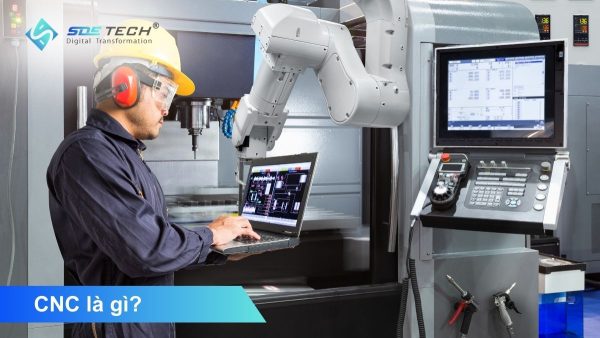
CNC is an acronym for Computer Numerical Control. It refers to machine tools that are fully automated and operated through pre-programmed instructions executed by a computer.
Unlike traditional machine tools that rely heavily on the skill and manual operation of machinists, CNC machines work based on digital designs. Once a program is loaded into the controller, the machine automatically moves the cutting tool along multiple axes (X, Y, Z, etc.) to remove material and form the part with exceptional precision and repeatability.
A brief history: CNC technology evolved from the early NC (Numerical Control) machines, which were controlled using punched tapes. With the advent of microprocessors, CNC systems became far more flexible, powerful, and intelligent—paving the way for modern mass production with ultra-tight tolerances.
2. Core Components of a Standard CNC Machine System
To operate smoothly and accurately, a modern CNC machine is built around three core components:
2.1 Controller – The “Brain” of the System
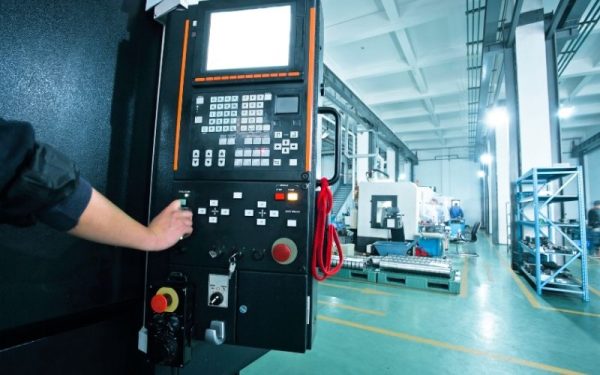
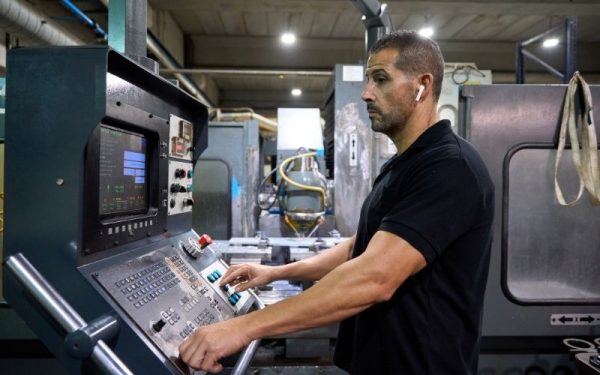
The controller is responsible for receiving the machining program (typically G-code). It interprets these commands and converts them into electrical signals that precisely control the motors on each axis, ensuring tool movements follow the programmed toolpath with absolute accuracy.
2.2 Actuation System (Mechanical System)
This includes the physical components directly involved in the cutting process:
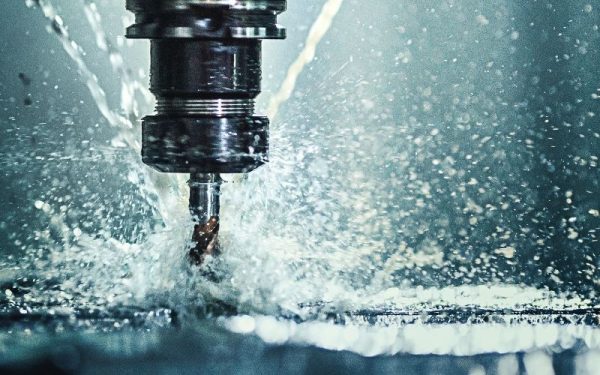
- Spindle: Holds the cutting tool and rotates at very high speeds to remove material.
- Machine Table: The platform where the workpiece (raw material) is clamped and positioned.
- Automatic Tool Changer (ATC): An automated system that allows the machine to switch between multiple tools (milling, drilling, tapping, etc.) without human intervention, enabling continuous multi-operation machining.
2.3 Feedback System
This system uses sensors (such as encoders) to continuously send position data back to the controller, indicating the exact real-time location of the cutting tool. If any deviation is detected, the system automatically compensates to ensure the final machined part strictly meets the specified dimensions and tolerances defined in the design.
3. Classification of the Most Common CNC Machine Types Today
Depending on production requirements, CNC technology is applied across various types of machines:
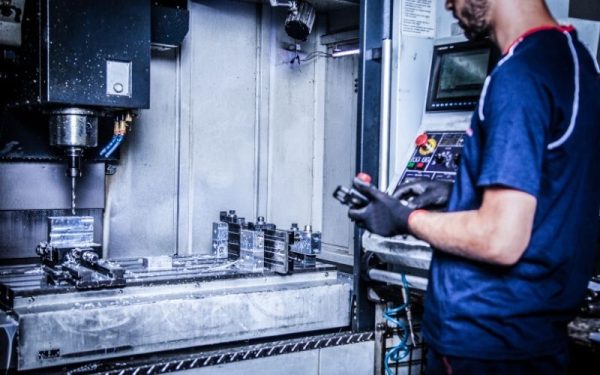
- CNC Milling Machines: The most widely used CNC machines, utilizing rotating cutting tools to remove material. Modern CNC milling machines range from 3-axis to 5-axis, enabling the machining of highly complex geometries with exceptional precision.
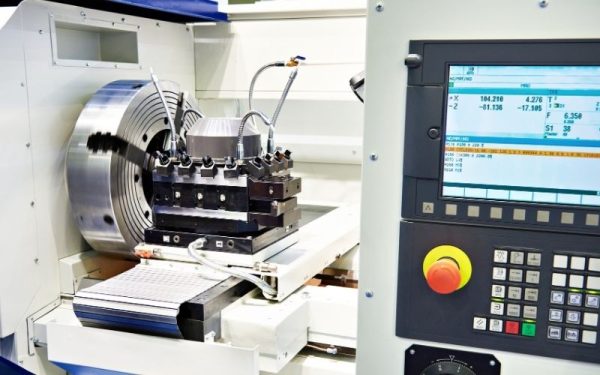
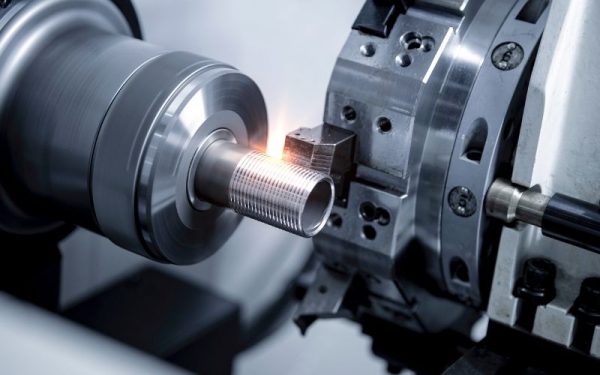
- CNC Lathes: Specifically designed for rotational parts. In CNC turning operations, the workpiece rotates while the cutting tool remains stationary or moves linearly to shape the part accurately.
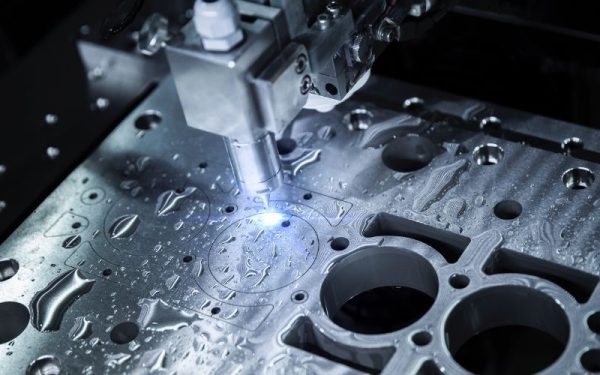
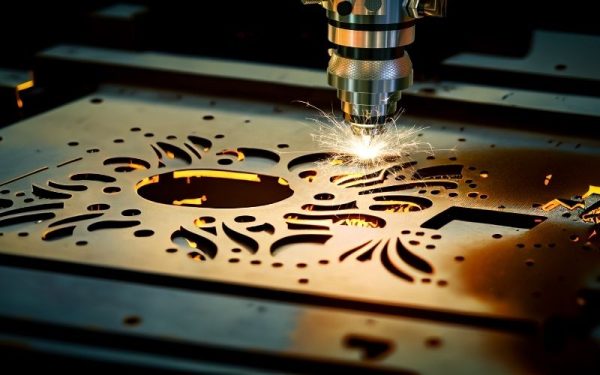
- CNC Laser/Plasma Cutting Machines: These machines use laser beams or plasma arcs to cut sheet materials, delivering extremely clean cut edges and high processing speeds, especially suitable for metal fabrication.
- Multi-tasking CNC Machines (Mill-Turn): A major technological advancement that combines milling and turning operations in a single setup. This significantly reduces setup time, minimizes repositioning errors, and improves overall machining accuracy and productivity.
4. Breakthrough Advantages of CNC Technology
Why should manufacturers invest in CNC instead of traditional machining?
- Absolute precision: CNC machines can achieve tolerances down to microns, ensuring that 100% of produced parts are identical and meet exact design specifications.
- Capability to machine complex geometries: Highly contoured 3D surfaces or deep, complex cavities—nearly impossible to produce manually—are a core strength of 5-axis CNC machining.
- Significant productivity gains: CNC machines can operate 24/7, stopping only for scheduled maintenance or workpiece changes, dramatically increasing overall output.
- Reduced material waste: Thanks to optimized programming and automated control, human errors are minimized, leading to a substantial reduction in scrap and rework.
5. The Critical Relationship Between CAM Software and CNC Machines
A common misconception is that owning a CNC machine alone is sufficient for efficient production. In reality, the CNC machine is merely the “body”, while CAM software (Computer-Aided Manufacturing) is the “soul” that brings it to life.
CAM software (such as NX CAM or Solid Edge CAM) is responsible for calculating and generating optimized toolpaths based on 3D CAD models. Without powerful CAM software, even the most expensive CNC machine cannot operate at its full potential—and may instead lead to excessive tool wear, longer machining times, and wasted production resources.
6. How to Optimize CNC Machine Productivity in the 2026 Era
At SDE Tech, we do more than provide machining solutions—we help you maximize every second of machine runtime through industry-leading technologies:
6.1 VoluMill Technology – High-Efficiency Machining
VoluMill is the world’s leading roughing toolpath optimization solution. This technology maintains a constant tool load, enabling deeper and faster cuts. As a result, manufacturers can reduce machining time by up to 70% and extend tool life by 2–3 times.
6.2 MANUSsim – Safe Collision Simulation and Control
A single CNC machine collision can cause damage worth billions of VND and bring an entire production line to a halt. MANUSsim accurately simulates G-code on a digital twin of the real machine, allowing early detection of any collisions between tools, workpieces, and fixtures—before you ever press the cycle start button.
6.3 Digitalization and the Smart Factory
Connecting CNC machines to manufacturing data management systems (such as Teamcenter PLM) enables business owners to monitor machine status in real time, predict maintenance needs, and optimize the entire supply chain—laying the foundation for a true Smart Factory.
7. Criteria for Choosing the Right CNC Machine for Your Business
To ensure an effective investment, manufacturers should carefully consider the following three factors:
- Materials and Products: Are you machining aluminum, steel, or superalloys? Are your parts relatively simple, or do they require complex 5-axis machining? The answers will directly determine the machine configuration and capability you need.
- Controller System: Choose machines equipped with widely adopted and reliable controllers such as Fanuc, Siemens, or Heidenhain. This makes it easier to recruit skilled operators and ensures smoother post-processor development and troubleshooting.
- Technical Support Partner: CNC machines require regular maintenance and continuous software optimization. A competent and experienced partner like SDE Tech will give you peace of mind throughout the entire lifecycle of your machine, from commissioning to long-term operation and performance tuning.
8. SDE Tech – Elevating CNC Machining Productivity in Vietnam
With over 10 years of experience, SDE Tech is proud to be a trusted partner of many leading global technology providers. We deliver end-to-end solutions ranging from CAM programming software to advanced productivity optimization tools such as VoluMill and MANUSsim.
Our engineers do more than just sell software. We work side by side with your machining shop to tackle the most challenging technical problems, ensuring that your CNC machines consistently operate at peak performance and maximum efficiency.
9. Frequently Asked Questions about CNC (FAQ)
9.1 What is the difference between G-code and M-code?
G-code (Geometric Code) controls the machine’s motion, such as linear moves, circular interpolation, and cutting paths. M-code (Miscellaneous Code) controls auxiliary machine functions, including spindle on/off, tool changes, and coolant activation.
9.2 Why is my CNC machine running slower than expected?
The most common reasons are non-optimized toolpaths or improper cutting parameters (speed & feed). Implementing advanced solutions such as VoluMill can comprehensively resolve these issues by maintaining consistent tool load and maximizing material removal rates.
9.3 Is it difficult to learn how to operate a CNC machine?
Basic CNC operation can typically be learned within 1–2 months. However, becoming a professional CAM programming engineer requires in-depth knowledge of machining technology, materials, cutting theory, and proficiency in advanced CAM software.
Understanding what CNC really is and mastering the accompanying optimization technologies is the key for manufacturers to break productivity limits and maximize profitability. A CNC machine is not just a tool—it is the foundation for creating superior-quality products. Looking to optimize your machining shop? Contact SDE Tech today to receive expert consulting and a live demo of the most advanced solutions available!
- Email: sales@sde.vn
- Hotline/Zalo: 085 256 2615 – 0909 107 719