Tiếng Việt
 日本語
日本語 한국어
한국어
In the field of Computational Fluid Dynamics (CFD), the pre-processing stage—particularly meshing—has long been the biggest bottleneck to productivity. For systems with complex geometries or interacting moving parts, generating a high-quality mesh can consume up to 80% of the total project time. The emergence of meshless CFD technology has ushered in a new era of fluid flow simulation, completely eliminating this constraint and allowing engineers to focus on the true physics of the flow rather than the complexity of mesh generation.
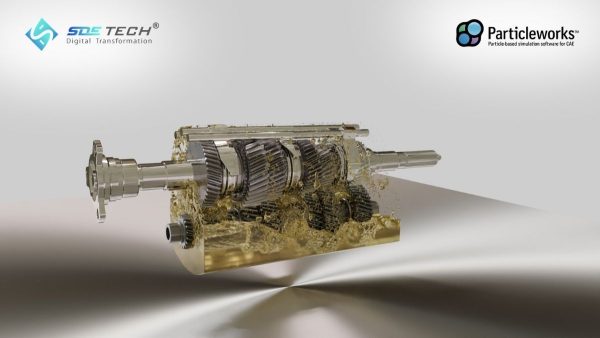
1. Overview of Meshless CFD Technology
Meshless technology represents a fundamental shift in fluid simulation methodology, offering a more efficient and intuitive approach—particularly for analyzing the behavior of liquids such as water and oil.
1.1. What is Meshless CFD Fluid Flow Simulation?
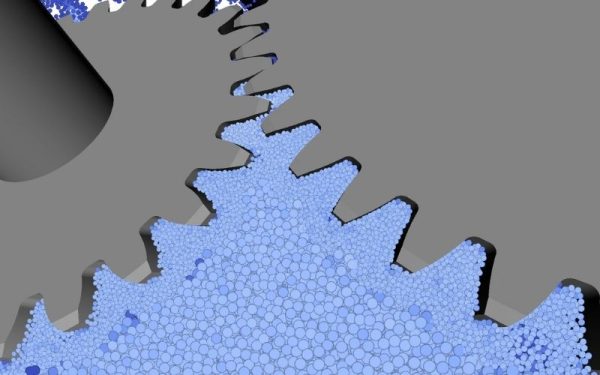
Meshless CFD is a simulation method that eliminates the need for a predefined grid or mesh to represent the computational domain. Instead of dividing the fluid domain into fixed elements, this approach uses a collection of particles to model fluid behavior. These particles move freely and interact based on governing physical equations, enabling highly visual and accurate tracking of flow dynamics.
1.2. Grid-Based vs. Particle-Based Methods
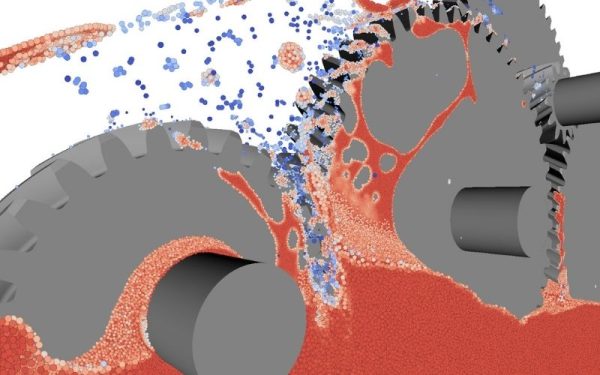
The fundamental difference lies in how the computational domain is defined and managed. Traditional mesh-based methods rely on fixed spatial grids (Eulerian approach), whereas particle-based methods—such as the MPS method in Particleworks—are based on the Lagrangian framework. This allows particles to move freely with the flow, naturally capturing large surface deformations without causing distortion to computational elements, as often encountered in conventional mesh-based approaches.
2. Why Does Traditional Mesh-Based CFD Have Limitations?
Despite its strengths, conventional mesh-based CFD is increasingly challenged by the growing demands for speed and complexity in modern product design.
2.1. Up to 80% of Time Spent on Pre-Processing
With traditional methods, engineers often spend days or even weeks cleaning CAD models and generating meshes manually. Even minor mesh defects can lead to simulation failure or non-convergence, resulting in wasted time and computational resources—ultimately impacting project efficiency and costs.
2.2. Challenges with Complex Geometries and Multi-Body Motion
Simulating systems with complex geometries or multi-body motion (e.g., mechanisms with 6 Degrees of Freedom – 6 DOF) is particularly difficult for mesh-based approaches. Frequent remeshing is required as components move and interact, increasing computational overhead and introducing potential inaccuracies. In contrast, meshless CFD allows components to move freely through particle domains without the need to maintain or regenerate mesh structures, significantly improving robustness and efficiency.
2.3. Bottlenecks in Free-Surface and Splashing Simulations
Simulating fluid behaviors such as oil splashing in gearboxes or liquid sloshing in tanks is extremely challenging with traditional mesh-based methods. Meshless CFD handles these phenomena exceptionally well, as fluid boundaries are inherently defined by particle positions. This allows for highly realistic representation of fine details such as tiny droplets, splashing effects, and complex wave motions (sloshing).
3. Key Benefits of Meshless CFD Technology
3.1. Eliminate Meshing: Direct CAD-to-Simulation Workflow
Engineers can directly import CAD data in formats such as STL, OBJ, and NASTRAN into the simulation environment. Without the need for complex meshing processes, users only need to define particle resolution and set boundary conditions—reducing preparation time from weeks to just a few hours.
3.2. Excellent Handling of Large Deformations and Viscous Flows
Particleworks enables accurate simulation of highly viscous fluids such as food products, cement, adhesives, and detergents. Its automatic free-surface tracking makes complex phenomena like splashing and large deformations far more intuitive and easier to analyze.
3.3. Efficient Fluid–Structure Interaction (FSI) Simulation
The system supports seamless simulation of fluid–structure interaction (FSI). It can automatically extract key parameters such as forces and torque (e.g., oil churning losses), while also handling heat transfer mechanisms—including conduction in solids and convection in fluids. This allows engineers to accurately predict the thermal and mechanical behavior of components interacting with fluid flows.
4. Particleworks – Leading Meshless CFD Software by SDE Tech
SDE Tech delivers Particleworks, a powerful yet intuitive solution that enables engineers to perform the entire simulation workflow within a unified environment.
4.1. Advanced MPS (Moving Particle Simulation) Technology
Particleworks utilizes the Moving Particle Simulation (MPS) method to accurately solve incompressible fluid flow problems. Its integrated user interface features a high-speed 3D visualization engine, capable of rendering millions of particles smoothly. This allows engineers to easily observe flow behavior and fine-tune simulation parameters in real time.
4.2. Superior Performance with Multi-Core GPU Acceleration (NVIDIA CUDA)
By leveraging the power of NVIDIA CUDA, Particleworks delivers high-speed computation directly on standard desktop PCs. This GPU-accelerated capability provides performance comparable to high-performance computing (HPC) clusters—significantly reducing infrastructure investment costs for businesses.
4.3. Optimized 4-Step Simulation Workflow
A streamlined workflow ensures quick adoption and efficient operation for engineers:
- Modeling: Import CAD data and define particle resolution
- Condition Settings: Set material properties and motion conditions
- Simulation: Run calculations with real-time result preview
- Post-Processing: Visualize results, export videos, and generate detailed reports
5. Real-World Applications of Particleworks Across Industries
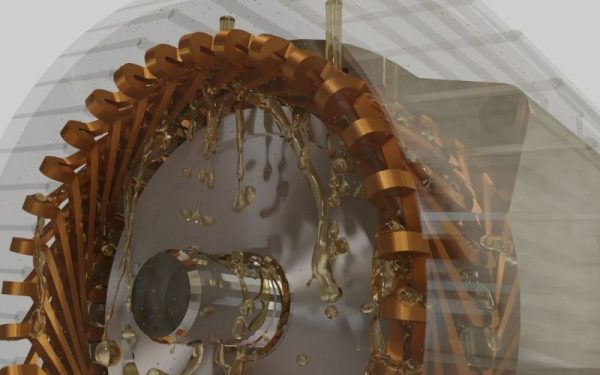
5.1. Automotive & Motorcycle Industry: Lubrication and E-Motor Cooling Simulation
Particleworks is widely used in the automotive sector to analyze complex fluid behaviors:
- Gearbox Lubrication: Simulates oil splashing and forced lubrication to optimize transmission efficiency and durability.
- E-Motor Cooling: Predicts winding temperatures and coolant flow behavior in next-generation electric vehicles.
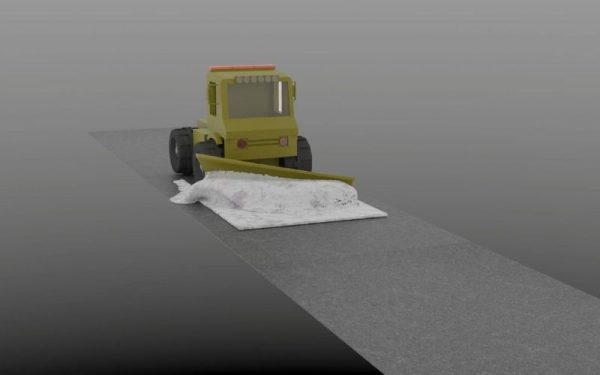
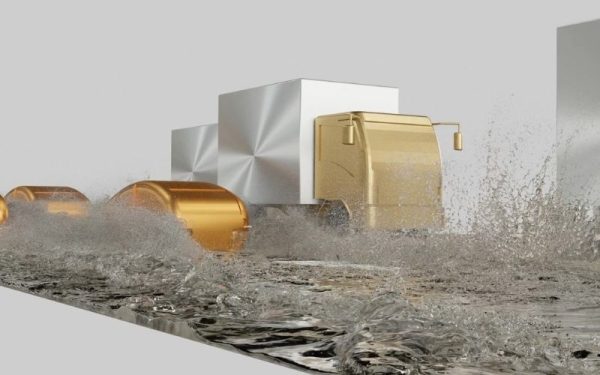
- Wading Performance: Analyzes vehicle interaction with water, mud, and snow, including related aerodynamic and hydrodynamic effects.
5.2. Manufacturing & Consumer Goods: Viscous Flow and Mixing Processes
Particleworks also excels in industries involving complex fluid processing:
- Mixing Processes: Evaluates the performance of agitators when handling high-viscosity materials such as chemicals and food products.
- Filling & Packaging: Simulates the flow of cosmetics and pharmaceuticals in production lines, helping reduce waste and improve efficiency.
6. Frequently Asked Questions About Meshless CFD Simulation
6.1. Is meshless CFD as accurate as traditional CFD?
For free-surface and splashing phenomena, meshless CFD often delivers more realistic results than conventional methods. Its ability to automatically compute forces and torque ensures high accuracy in dynamic analyses, especially for complex fluid interactions.
6.2. Does particle-based simulation require high-end hardware?
Not necessarily. Thanks to GPU optimization, Particleworks can run large-scale simulations on standard workstations equipped with dedicated NVIDIA CUDA graphics cards—eliminating the need for complex server infrastructure.
6.3. Can Particleworks simulate airflow?
Yes. Particleworks includes an integrated internal airflow solver, enabling simulation of basic gas–liquid interactions and providing a more comprehensive analysis of real-world physical phenomena.
6.4. How long does it take to learn Particleworks?
By eliminating the complex meshing process and offering an intuitive interface, Particleworks allows CAE engineers to start setting up and running basic simulations in a short time. This significantly reduces training time and associated costs for businesses.
Meshless CFD simulation is a breakthrough technology that empowers companies to overcome traditional limitations in product R&D. With Particleworks, SDE Tech is committed to helping you optimize production processes, reduce testing costs, and elevate your technological capabilities.
Ready to eliminate meshing and boost your simulation productivity? Contact SDE Tech today for expert consultation and experience a live Particleworks demo!
- Website: sde.vn
- Email: sales@sde.vn
- Hotline/Zalo: 085 256 2615 – 0909 107 719