Tiếng Việt
 日本語
日本語 한국어
한국어
Why should testing and simulation be part of future engineer training programs at universities? In part two of the Simcenter for Academia series, we talk with some of our top experts – engineers with many years of experience – to hear their insights on today’s market challenges and how Simcenter supports the academic community. Today, we revisit an exciting engineering career with Gil Morris, Project Director of the Siemens Education Partner Program.
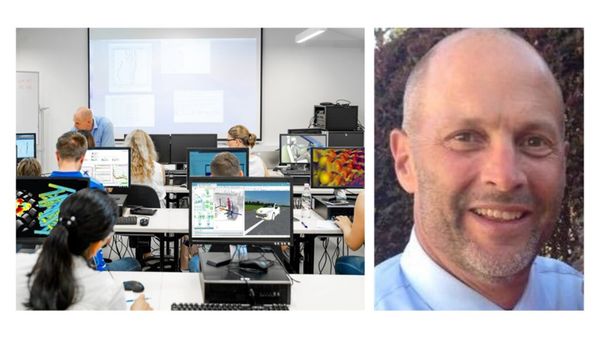
Gil Morris, Project Director of the Siemens Education Partner Program
If you’ve had such a diverse career as an engineer, could you share some highlights?
Gil Morris: After earning my mechanical engineering degree at Purdue University, I began working in an engine manufacturing plant at General Motors. My first task was to design a gear noise test, about which I initially knew nothing. So I proactively learned on my own and collaborated with colleagues to understand the technology.
While working at GM, I completed a master’s degree in engineering at Purdue through a distance learning program. Later, I moved from manufacturing to product engineering, a field where I developed requirements for engine component noise. These were the early days of the “V-cycle.”
After more than 12 years at GM, I left and joined LMS International* as a sales engineer. There, I was the primary account manager for Asian automotive OEMs in the U.S., including Honda, Toyota, Nissan, and Hyundai (*LMS International was acquired by Siemens in 2013).
What is your current role?
G.M: In a few weeks, I will become the program manager for the Siemens Digital Industries Software Global Education team. Over the years, we have developed an engagement model with targeted universities. Our main goal is to use our practical experience with select universities to develop and share best practices and lessons learned.
Our engagement model includes both top-down and bottom-up approaches. We connect university executives with leaders in the education sector while working with faculty and students to develop engineering curricula. The ultimate goal is to close the skills gap we are seeing emerging in the engineering world.
What are the main challenges you see in the industry today?
G.M: The skills gap is definitely one of the main challenges. There is an aging workforce of engineers nearing retirement (and I will soon be among them). Unfortunately, many of us have relied on self-taught experience over the years, while witnessing a strong digital transformation. I would add that this is even more relevant during the pandemic.
Digitalization and the speed of innovation are creating increasingly complex technical challenges that require superior thinking. We must ensure that future engineers receive the type of education needed to meet these challenges.
In your view, what skills will future engineers need?
G.M: Companies expect new hires to be productive immediately and to work effectively from day one. This includes not only understanding multiple engineering disciplines and mathematical and physical theories, but also having strong communication skills, teamwork ability, and efficient use of multiple tools.
How important is training future engineers for different industries?
G.M: Training the next generation of engineers is crucial for success at many levels. The next generation will need knowledge not only in core fields such as mechanical, electrical, computer science, fluid dynamics, or mechatronics, but also a solid foundation across disciplines to understand how systems interact and function together.
To achieve this now, students need hands-on practice and real-world experience. That’s why industry interaction is critical. It can take many forms: a real-world problem implemented as a class, lab experiments, and projects with practical equipment.
As a company, we support many student groups participating in events such as the World Solar Championship Challenge. These classroom events give students excellent hands-on experience. Within our organization, we also offer various internships from basic to master’s and Ph.D. exchanges, allowing students to share experiences and analyze real industrial problems.
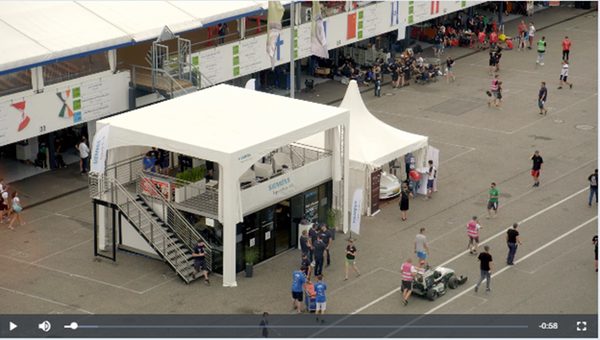
Together for an innovative future
Educators need more connections with companies and experts in engineering to truly understand industry needs, as this is not something you can learn from books or blogs. I also believe that all scholars and professors should promote a multidisciplinary approach and practical experience as part of the curriculum.
For example, offering a series of courses spanning multiple engineering disciplines, a senior workshop or capstone course before graduation, mandatory internships, or participation in team projects.
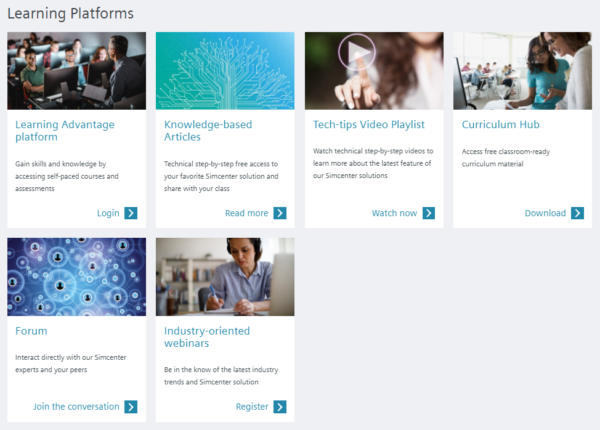
In the meantime, existing learning platforms are available, check out
Many recent graduates do not meet hiring requirements to start as engineers. As a leading company, how can Siemens help them?
G.M: Our role at Siemens is to connect the engineering industry with the educational environment. This means sharing our own and our customers’ experiences. Our role also includes providing digital tools and training materials to facilitate learning experiences. We should act as thought leaders for academia, sharing insights on challenges the industry faces.
Innovation in the Classroom Podcast
Can you give a concrete example of this skills gap?
G.M: A key area recent graduates lack is understanding simulation and testing and why it’s important. In my view, simulation and digital twins are essential tools to solve problems, but they are only useful if they contain data.
Similarly, testing knowledge is equally important to know how to set up proper tests and what to test – especially when validating a digital twin. Understanding both testing and simulation and how they work together is the key.
Why should testing and simulation become part of engineering curricula?
G.M: Laboratories, R&D rooms, test benches, test tracks, workshops, storage racks – traditionally these were places for practical engineering practice, while computer screens took over modeling, simulation, and digitalization.
However, we cannot let the next generation forget the importance of testing and how it validates what you see on the screen. Indeed, the time spent testing one prototype after another is gone, and lab experience and testing expertise become even more valuable as the next generation works with advanced digital twins and even AI-driven applications.
As you approach retirement, do you have any advice to share?
G.M: With 35 years in the industry, the most talented engineers I’ve met understand the importance of physical testing and advanced simulation engineering. They know how to use these tools effectively and recognize their limitations. The right balance of simulation and testing is needed to solve a problem.
I believe the Simcenter product portfolio is ideal for this. It facilitates an end-to-end digital chain and covers multiple domains such as mechanical design, fluid dynamics, and heat transfer, all of which can be addressed with a unified toolkit. Teaching Simcenter solutions at universities helps bridge the gap between education and industry.
But why stop there? Before retiring, I also want to point out that we are branching out to STEM high school students. It’s never too early to encourage engineering as an exciting career choice.
In conclusion, on behalf of the Simcenter family, we thank Gil Morris for over 20 years of dedicated service and wish him all the best in his future endeavors.
Source: Siemens
SDE Digital Technology Co., Ltd. (SDE TECH) was established in 2014. By 2018, we were honored to become a Smart Expert Partner – a leading partner of Siemens Digital Industries Software in the Southeast Asia – Pacific region for Siemens NX (Unigraphics NX), Simcenter, Solid Edge, Tecnomatix, and Teamcenter management solutions.
 Businesses and customers may contact SDE TECH at the following: