Tiếng Việt
 日本語
日本語 한국어
한국어
The year 2026 marks a significant turning point in the enforcement of intellectual property rights in Vietnam. With the introduction of Official Dispatch 314, which strengthens software copyright enforcement, along with increasingly rigorous inspection campaigns, the use of unlicensed (cracked) software is no longer a matter of “taking chances.” It has become a serious and immediate risk that can disrupt an enterprise’s entire manufacturing and business operations.
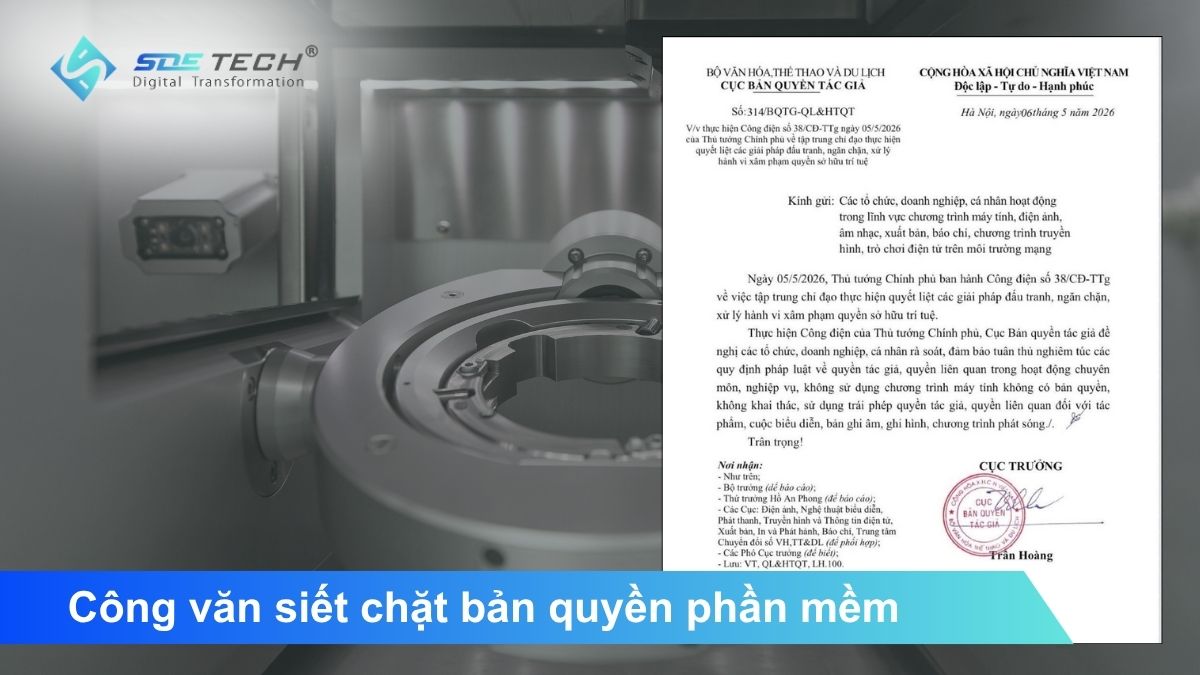
1. Official Dispatch 314: Legalizing the “Elimination” of Pirated Software
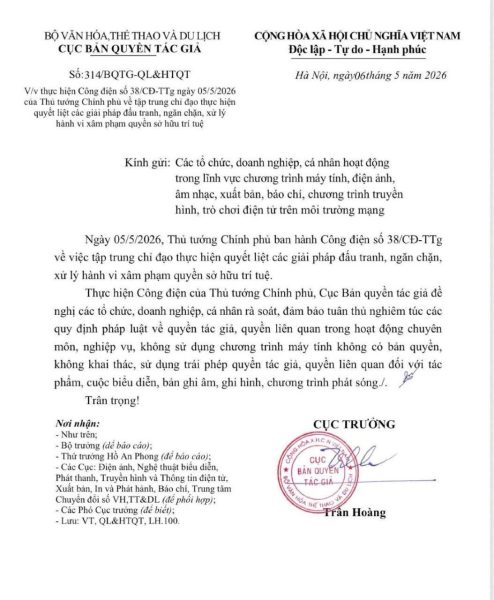
According to Official Dispatch 314/BQTG-QL&HTQT issued by the Copyright Office of Vietnam, organizations, enterprises, and individuals are required to strictly comply with copyright regulations, refrain from using unlicensed software, and avoid unauthorized exploitation of digital resources.
This initiative is being implemented in accordance with Official Telegram 38/CĐ-TTg issued by the Prime Minister, which focuses on strengthening efforts to combat, prevent, and handle intellectual property rights violations in the digital environment.
The use of unverified CAD/CAM/CAE software tools is now easier to detect than ever before due to:
- Automated scanning systems: Major software vendors such as Siemens, Mastercam, and Dassault Systèmes have integrated tracking mechanisms that automatically send reports to their servers when pirated software is activated.
- Inter-agency collaboration: The Inspectorate of the Ministry of Culture, Sports and Tourism closely cooperates with the Cybersecurity and High-Tech Crime Prevention Police Department to conduct unexpected inspections and compliance audits.
2. “Invisible” Risks with Very Real Consequences
Many businesses still assume that using pirated software is simply a way to reduce initial costs. However, the actual consequences are often far greater than the cost of legitimate software licenses.
2.1. Criminal Liability and Extremely High Administrative Penalties
In 2026, enforcement measures and penalties have become significantly stricter. Companies violating software copyright regulations may face:
- Administrative penalties: Fines for corporate entities can reach hundreds of millions of VND.
- Criminal liability: Under Article 225 of the Criminal Code, large-scale copyright infringement may result in imprisonment or fines of up to billions of VND, and businesses may even face permanent suspension of operations.
2.2. Cybersecurity Risks and Production Disruptions
Cracked software often contains malware, Trojans, or ransomware.
- Data loss: Critical design files may be encrypted or permanently deleted.
- Technical failures: Pirated software does not receive official hotfixes or updates, increasing the risk of software crashes and calculation errors in CNC toolpaths, potentially causing damage to workpieces and cutting tools.
2.3. Risk of Being Removed from the Global Supply Chain
As Vietnam becomes more deeply integrated into free trade agreements such as EVFTA and CPTPP, major corporations from the United States, Europe, and Japan increasingly require their partners to demonstrate full software compliance and legal licensing.
If copyright violations are detected, businesses may be immediately terminated from contracts and placed on supplier blacklists, severely impacting their reputation and future opportunities within the global supply chain.
3. Comparison Table: Licensed Software vs. Pirated Software
| Criteria | Licensed Software (Legal) | Pirated Software (Crack) |
| Legal Compliance | Fully compliant with Intellectual Property laws and regulations. | High risk of lawsuits, financial penalties, and criminal liability. |
| Technical Stability | Regularly updated, fully supported, and highly stable. | Frequently unstable, missing features, and unsupported. |
| Security | Protects confidential business and design data. | Highly vulnerable to malware, viruses, and ransomware attacks. |
| Business Reputation | Enhances credibility when working with global partners and major corporations. | Considered unprofessional and high-risk by customers and partners. |
4. What Should Businesses Do Right Now?
To minimize legal and operational risks, businesses should proactively review their entire software ecosystem and take the following actions:
- Conduct a full audit of all software and existing licenses
- Verify the number of users against the permitted license scope
- Remove all unverified or unauthorized software
- Standardize operations with genuine licensed software
- Establish a centralized software license management process
- Properly store all software contracts, invoices, and licensing documents
Standardizing software systems not only helps businesses ensure legal compliance, but also improves operational stability, strengthens cybersecurity, and enhances credibility when working with international customers and partners.

5. The Shift Toward Licensed Software Is Becoming Increasingly Clear
In the era of digital transformation and global integration, the use of genuine licensed software is becoming a critical standard for manufacturing and engineering enterprises. Many international partners now require companies to prove the legality and compliance of their software systems before participating in supply chains or project implementation.
As a result, investing in licensed software is no longer just a legal requirement — it has become a strategic foundation for sustainable growth and long-term competitiveness.
In 2026, software copyright compliance is no longer optional; it is essential for business survival. Proactively complying with software licensing regulations not only helps enterprises avoid legal risks associated with Official Dispatch 314, but also serves as a gateway to participating in professional global supply chains. Contact SDE Tech today for consultation on the safest, most efficient, and cost-optimized licensed software strategy for your business.
*Reference source: ThuVienPhapLuat