Tiếng Việt
 日本語
日本語 한국어
한국어
HOW HITACHI USES COMPONENT-BASED TPA TO REDUCE TESTING TIME BY 66%
Today’s vehicles are transitioning from human-driven, gas-powered systems to autonomous and electric vehicles. At the same time, engines are becoming smaller and quieter. Yesterday’s vehicles had large, noisy engines that masked sound and vibration from other components, such as the steering system.
The shift to automatic transmissions also means drivers no longer need to focus intensely on the road. When drivers can comfortably perform other activities while the vehicle is in motion, a variety of sounds become more noticeable than before.
Until recently, noise was an issue OEMs and suppliers did not prioritize. However, to remain competitive, automakers must optimize NVH (Noise, Vibration, Harshness) and integrate it into their designs much earlier than traditional methods.
Eliminating Old Methods
Traditionally, engineers used steel test rigs to analyze NVH in vehicle components. However, when components were moved from the test bench to the vehicle, vibration often increased significantly. Predicting noise and vibration on the test bench was therefore extremely challenging.
Additionally, NVH analysis used to be one of the last steps for automakers. This meant NVH issues were often resolved right before production, causing delays and extra costs.
Haruyu Inoue, Senior Engineer in the CAE Technology Development Department at Hitachi Automotive Systems, Ltd., stated: “With limited internal resources, it was difficult to develop technology based on application development.”
The steering system engineering team at Hitachi Automotive Systems began looking for a better way to predict NVH.
Deploying Component-Based TPA
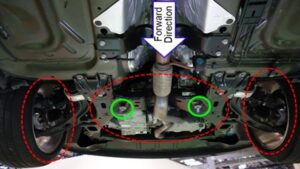
Hitachi Automotive Systems partnered with Simcenter Engineering to use component-based transfer path analysis (TPA) to predict NVH in a steering system within an actual vehicle, rather than only on a test bench. Siemens worked with Hitachi Automotive Systems to “decompose” components to understand how the steering system operates and how it affects overall NVH in the vehicle.
Maximizing Component-Based TPA
The Hitachi team also had access to component-based TPA tools within Simcenter Testlab. While TPA could be performed with this tool, many teams struggled with measurement data. Siemens engineers provided the expertise Hitachi Automotive Systems needed to not only generate TPA data but also measure and interpret it.
Expanding the Team
By collaborating with Siemens, Hitachi Automotive Systems was able to significantly expand the capabilities of its engineering team. With Simcenter Engineering, Hitachi gained access to the latest applications and methodologies, freeing up the team to focus on predicting NVH for individual components.
Inoue expects that tests that previously took three days could be reduced to just one day. “We anticipate that this Siemens initiative will allow us to reduce the number of prototypes from at least four to just two, cutting 50% of the time for prototyping, detailed testing, and vehicle testing,” he said.
“We will continue to use Simcenter. With Simcenter we can start from computer-aided design and seamlessly transition into acoustic simulation,” said Inoue. The team plans to connect its models from Simcenter to test for future product improvement proposals.
Inoue noted, “We believe NVH regulations for vehicles will become increasingly stringent. Noise that is not only loud but uncomfortable for passengers will become more complex.”
The Hitachi team plans to work with Siemens to develop subjective noise ratings. “If we can analyze subjective noise evaluations using measurement methods and improve that noise in Simcenter, we can significantly enhance development efficiency,” explained Aoi Nakanome, CAE Technology Development staff.
“We will continue to use Simcenter. With Simcenter, we can start from computer-aided design and seamlessly transition to acoustic simulation,” said Inoue. The team intends to connect their models from Simcenter to testing and make recommendations for future product improvements.
Source: Siemens
SDE Digital Technology Co., Ltd. (SDE TECH) was established in 2014. In 2018, we were honored to become a Smart Expert Partner – a leading partner of Siemens Digital Industries Software in Southeast Asia – Asia Pacific for Siemens NX (Unigraphics NX), Simcenter, Solid Edge, Tecnomatix, and Teamcenter solutions.
 Enterprises and customers wishing to contact SDE TECH via: