Tiếng Việt
 日本語
日本語 한국어
한국어
EXPANDING MATERIAL OPTIONS FOR ADDITIVE MANUFACTURING
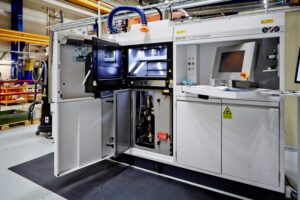
Additive Manufacturing (AM) has profoundly transformed the world of manufacturing and design. AM is unlike any other manufacturing method for many reasons. The first and most obvious is that, instead of removing, deforming, or bonding materials together, AM deposits material layer by layer — the closest analogue being the laboratory-grown industrial diamond industry.
This fundamental difference contributes to AM’s unique ability to create internal structures and deliver many other advantages inherent to the technology. However, these advantages remain relatively early-stage to this day, particularly in terms of material selection.
It can be confidently stated that traditional manufacturing methods have had thousands of years to diversify the range of materials in use. Worked gold has been found dating back to the Paleolithic era; other precious metals and tin were already widely used nearly 3,000 years BCE for jewelry, tools, and weapons. These materials remained preferred choices until the Iron Age, marked by the emergence of ferrous metals and improved techniques.
The final major acceleration in metallurgy for manufacturing came from global industrial revolutions, enabling faster and more cost-effective automated experimentation.
AM is still “very young” on this journey; however, there are several important points to note:
- Additive manufacturing can be applied not only to metals — different processes can be used to create polymer materials, amorphous materials such as cement and ceramics, composite materials, and metals.
- Additive manufacturing is being accelerated by the computer revolution — increased processing power and sophisticated software are helping us understand AM faster than ever before.
- Additive manufacturing is built upon previous achievements — while complexities remain, the foundational knowledge applied in AM is increasingly well understood.
Beyond driving the expansion and application of AM among home manufacturing enthusiasts and traditional research institutions, searching for “3D printing” on YouTube will reveal thousands of videos of makers using plastics and even metals for their projects. While many of these projects demonstrate innovation in material selection, the most significant breakthroughs are emerging from research organizations.
One notable innovation arises from collaboration between academia and government research — additive manufacturing of silicon carbide. This process has quickly been adopted by universities for validation, with substantial implications for high-temperature applications. Further research is still required to understand how these printed structures interact within their most common environment — nuclear reactors — compared to traditional ceramic manufacturing methods.
It remains unclear how prolonged neutron bombardment will affect these structures, but Oak Ridge National Laboratory has chosen to conduct extensive testing within its reactors. Regardless of its effectiveness in nuclear engineering, research into silicon carbide and ceramic material printing is a strong indicator of the adoption of new materials in this manufacturing technique. Complex amorphous structures — such as optical glass — were not widely utilized until the 17th century, despite glass first being produced nearly 2,500 years BCE.
In practice, AM combined with comprehensive software has accelerated mastery of amorphous material manufacturing from millennia down to mere decades.
Material selection can significantly enhance design, whether chosen for weight, thermal properties, or even aesthetics. And while the additive manufacturing industry continues to expand the list of usable materials, computational capabilities are advancing at an ever-increasing pace.
Siemens Digital Industries Software is driving the transformation toward creating a digital enterprise, where engineering design, manufacturing, and electronics are strongly integrated and interconnected.
Source: Siemens
SDE Digital Technology Co., Ltd. (SDE TECH) was established in 2014. In 2018, we were honored to become a Smart Expert Partner — a leading partner of Siemens Digital Industries Software in the Southeast Asia – Asia Pacific region for Siemens NX (Unigraphics NX), Simcenter, Solid Edge, Tecnomatix, and the Teamcenter management solution. For enterprises and customers wishing to contact SDE TECH, please refer to the information below: